England’s flagship farming scheme returns, but funding gaps and policy missteps threaten both nature and food production
Written by Joe Stanley, Head of Sustainable Farming, The Allerton Project
Fifteen months after the abrupt closure of applications to the Sustainable Farming Incentive (SFI) in March 2025, farmers in England are inching closer to its limited relaunch, currently scheduled for 30 June.
The default position of stakeholders at such a moment is to welcome the increased clarity and note that farmers are now in a better position to plan for the future. And yet, in reality, we are in a deeply unsatisfactory situation. It has been a full decade since the vote to leave the European Union and its Common Agricultural Policy (CAP), and yet here we are still awaiting a limited rollout of successive governments’ flagship farming and environmental vehicle after more false starts that it is becoming possible to count.
English farmers may this year claim a maximum of £600 in old-style direct (subsidy) payments, yet as many as half of holdings are currently excluded from their replacement, while those within the stewardship tent hold a bewildering array of historic agreements, which are testament to the chaotic development of Environmental Land Management (ELM) schemes since 2016. Over borders in the devolved nations, however, virtually full-fat CAP-style payments have remained available to our neighbours throughout the preceding decade.
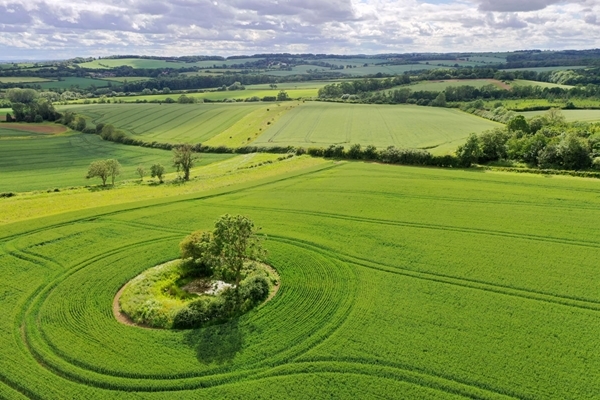 Food production in England is now unsupported by public money, in contrast to both our European and UK neighbours, while English farmers are in direct competition on global markets with the cheapest cost-of-production models around the world.
On 11 June Defra announced that £240m would be made available for SFI26 schemes across two application windows this year, beginning with £60m for farms smaller than 50ha or those farms with no agreements at all from 30 June. That leaves £180m for a second round of SFI applications from September, with no further funding available until April 2027. According to the RSPB, in that same window some 18,000 stewardship agreements of all types will end, with a value of some £400m.
Clearly, there will be a significant and inevitable shortfall in terms of environmental delivery, while ELM development never seriously addressed the question as to how the 62% of the average English farm’s income provided by CAP was to be replaced. SFI was never intended to be a competitive scheme; the trade-off from the removal of direct area subsidy available under the EU was that everyone who wished to engage with it could do so, to their own preferred level of ambition. Yet the immovable object of a limited and declining budget inevitably met the unstoppable force of 100,000 English farm businesses looking to take government up on its offer of a bright new future.
This failure represents a lack of political ambition from successive governments, with the Defra Farming & Countryside Programme’s budget of £2.60bn in 2025-26 falling to £2.25bn by 2028-29. Yet even this starting point was a sum of money set at the EU level in 2013 to fund CAP direct payments; it has no relevance to the scale of the environmental challenge set for it today, nor does it take into account historic inflation over that time period, which has decreased the budget’s value by at least 35%. Adhering to the ‘income forgone plus costs’ model, meanwhile, neatly sidesteps the need to put a true value on the natural capital and ecosystem services farmers are delivering, while providing little monetary incentive for the majority of farms to engage ambitiously.
We have legally binding targets on biodiversity, air and water quality, and of course on carbon emissions. As stewards of 70% of the land area of the UK, it’s axiomatic that farmers are key to delivering on most of these targets. Indeed, in January 2025 the Office for Environmental Protection (OEP), the watchdog government created to oversee its progress on such policy, gave as its primary recommendation that:
“The government remains off-track and very substantial challenges lie ahead… It is essential that the government strengthens engagement with farmers and landowners if it is to achieve Environment Act targets and many other environmental ambitions and commitments.”
At the Allerton Project, we firmly believe that these environmental objectives can and must be achieved while also delivering for the nation on food production; indeed, we believe that the one can benefit the other. And yet, we still have no informal aim – let alone a legally binding target – for domestic food production, as if the experience of the last five years has completely passed policymakers by.
The point might also be made by the OEP that – for all the ambition set out in the 25 Year Environment Plan and other environmental papers – we currently have no means to tell what impact the money we are spending is having: there has been no requirement to baseline or collect data of any kind either before, during or after participation in an agri-environmental scheme, meaning that the evidence demanded by Treasury demonstrating value for money and return on public money for public goods is entirely lacking. The other nations of the UK have recognised this and made such data collection an important element of their slowly evolving schemes: what a baffling lack of curiosity and ambition that demonstrates in England, where the entire purpose of agricultural policy since 2016 has been to improve environmental outcomes.
What’s more, the new cap of £100,000 for SFI schemes – ostensibly to benefit smaller farms – will stifle the scale of ambition of medium and large estates, with no scientific basis whatever. This is a transparent attempt to make a limited budget stretch further (as are reductions in payment rates for the most popular SFI options below even income forgone) dressed up in the language of social justice.
In its recent statement, Defra expressed an ambition to enable current agri-environmental agreement holders with schemes expiring in 2026 to begin the application process before those schemes expire, thereby hopefully (for some) avoiding the cliff-edge loss of both income and environmental delivery between current scheme expiry and access to SFI26. This is welcome, yet also the bare minimum that we might expect after a decade of policy development, and following on from 2025’s barely avoided cliff edge for thousands of historic Mid-Tier agreements due to expire that December.
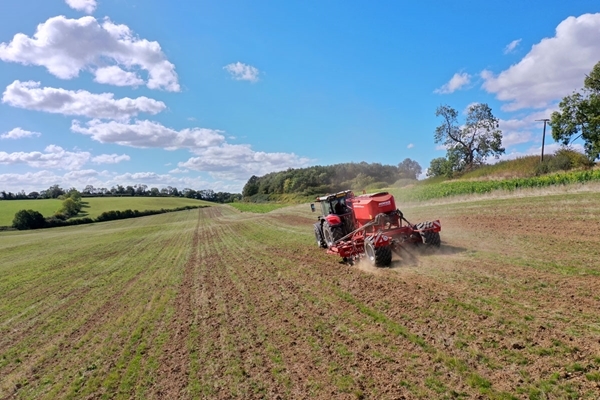 Winter wheat being established into the remains of a herbal ley at the Allerton Project, autumn 2025.
Among them was the Allerton Project’s, and yet the last-minute 12-month rollover did not come in time to save our legume fallow and herbal ley rotational options, which were returned to the arable rotation, lacking the direct financial justification to remain unsupported at a time of unprecedented economic pain for the cereals sector. What follows over the next six months is uncertain; will we be able to access SFI26 from the second application window, or will we – home of much of the research that has helped develop UK agri-environmental schemes – be once again faced with the decision of what to save and what to grub out as a result of governmental fecklessness and Treasury parsimony?
There is no doubt that the UK faces financial pressures as it has rarely done in our lifetimes. Yet, as debate rages about national defence spending and how increases in that critical sphere can be justified versus increases in welfare, health and debt repayments, it’s also worth noting that the amounts of additional expenditure being sought for food, farming and the environment are barely a rounding error of these bigger debates, yet the vital services we provide as an industry are as critical to our long-term health and wellbeing as a nation. We can only continue to develop the evidence, make the case and hope for the best.