By Mike Swan, Senior Advisor
Everywhere I look just lately there is publicity about bird feeding. As we move through autumn and towards winter, the RSPB is encouraging people to think carefully about how, when and why they feed garden birds. Its recent “Feed Seasonally, Feed Safely” campaign highlights concerns about disease transmission at feeding stations, whilst also emphasising the importance of natural food sources and wildlife-friendly gardens. The particular concern is trichomonosis, caused by a protozoal parasite, and carried without harm to some species, but which is a serious and often fatal infection for others.
All of this leads me to question why we feed birds in the first place? Please do not get me wrong, there are peanut feeders and fat balls outside my kitchen window throughout the winter. My wife Mo and I love to see the garden birds, especially on a white and frosty midwinter morning. But, how much real good are we doing? Is this really about conservation, or just satisfying our delight at seeing those garden birds up close?
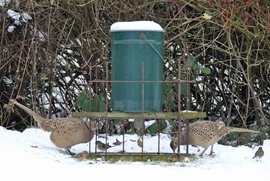 GWCT science is absolutely clear on the value of late winter and spring feeding for game. Pheasants which have access to hoppers with wheat as a calorie top up during the springtime ‘hungry gap’ are twice as likely to raise young to fledging, and we know that wild partridges use the selfsame feeders to their benefit too. Our research also shows that, quite a few other farmland birds are also winners, you only need to see the yellowhammers and chaffinches gathering up the scraps under a gamebird feeder to be enthused that feeding gamebirds in spring helps the others too.
But back to the garden. One summer morning a couple of years ago we were lying in bed, and I heard a persistent tapping that appeared to be coming from our under eave cupboards. My first guess was mice, but Mo worked out the solution the following day. Sitting downstairs with her morning cuppa, she heard the same again, and peered out to see a great spotted woodpecker doing its best to break into one of our house martin nest boxes.
Over the years the martins have built two natural nests alongside the eight boxes which we have put up. That summer, only one natural one was restored and used; it was broken into twice, and both broods that it produced were taken by the woodpeckers, just before they were grown up enough to fledge. In September I noticed that the artificial nest where Mo had spotted the woodpecker had the wooden top above the entrance badly chipped away, where the woodpecker had tried hard to enlarge the hole. I set off to examine the rest, and all had signs of woodpecker pecking. It was clear that none of our martins would have fledged a brood had the nests been made of mud rather than concrete.
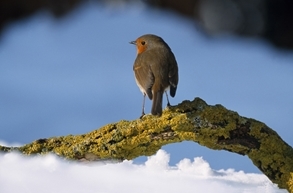 Since then, with a view to not over-encouraging the woodpeckers, we have generally stopped feeding at the bird table by the end of March. Whether this means that we are cutting off important supplies to the likes of blue tits, robins and dunnocks I do not know, but it is actually in line with what we were told about garden bird feeding when I was a boy. The view back then was that peanuts and suet may be fine for adult tits and finches in winter, but that they are not a healthy diet for chicks.
Whatever, the woodpecker problem has not arisen again, and our eight artificial nests and one natural produced seventeen broods last year. It would probably have been eighteen, but one box is always occupied by blue tits, so one pair always has to wait until they have fledged, which only leaves them enough time to raise one brood.
As I ponder on all of this, I wonder about our impact on the ‘balance of nature’. This speculation is all set against the truth that whatever balance there is out there is man-made anyway. There are too many of us on this earth that we can leave nature to its own devices, and besides, we are part of nature whether we like it or not. But let’s think about the winners and possible losers from our habit of feeding garden birds.
Great spotted woodpeckers are very much in the ascendancy, but to what extent is that fortuitous, and how much does likely improved winter survival after a diet of bird table peanuts contribute to their population growth? Meanwhile, there is a concerning decline in lesser spotted woodpeckers. Is this just coincidence, or is competition, or perhaps even increased nest predation from the bigger boys and girls a contributory factor?
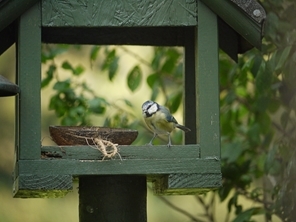 And, what of the tits? Marsh and willow tits are both declining, and neither species makes use of our bird table offerings. Could it be that competition is a factor in the decline? Perhaps the blue, coal and great tits that have flourished in our gardens over winter are monopolising the available nest holes when they spread away into the woods in spring to the detriment of the shyer species.
Willow tits also have a habit of excavating their own nest holes in rotten wood. These must surely be easy to open for a great spotted woodpecker with its dagger bill. Could it be that increased predation of nestlings is contributing to their steep decline?
Our interactions with nature do not happen in isolation; every time we apply pressure at some point, things will likely give at others. So, I do wonder if we have taken garden bird feeding too far. What was once, in theory at least, about putting out a few scraps to help some of our favourites through the winter, has now become a year-round hobby and, dare I say it, a major industry. Perhaps the current debate is a timely reminder that providing habitat, natural food and clean water may ultimately be every bit as important as what we choose to put in a feeder.