Key points
- Measurable impacts of released gamebirds on insects and other invertebrates are largely confined to small, localised areas where birds gather, such as release pens.
- Where birds are well dispersed across the wider countryside, even at moderate densities, there is little evidence of significant impacts on invertebrates.
- Adult released pheasants and partridges eat very few of insects for most of the year.
- When insects do appear in their diet, it reflects what is available rather than active hunting.
- Many habitats managed for gamebirds would not exist without releasing and provide proven benefits for insects and wider wildlife.
- Good release management keeps any local effects small while delivering net biodiversity gains across farmland and woodland landscapes.
Background
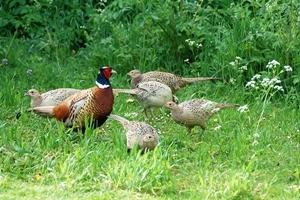 Pheasants were introduced to the UK around the 12th century, while red-legged partridges were introduced in the 18th century. Populations of the main quarry species, the grey partridge, began to decline in the early 20th century and in response, releasing pheasants and red legs for shooting has gradually increased. Today it is estimated that between 35-46 million pheasants and 8-14 million partridges are released each year.
The process of releasing starts on rearing fields followed by the release of pheasants into large pens in woodland in mid-late summer and partridge into small pens on farmland a bit earlier. The way these birds are managed, from habitats around release pens to feeding practices, plays an important role in maintaining and improving features such as hedgerows, woodland rides, field margins and game crops, all of which have knock-on benefits for wildlife.
Concerns have been raised about whether large numbers of release birds could negatively affect invertebrate populations, either directly i.e. by predating them, or by disturbing the habitats they rely on. Invertebrates play a vital role in ecosystems, supporting birds, mammals and plants, and their decline is a major conservation concern. Understanding whether gamebird releasing harms insect populations and if so, where and under what conditions, is therefore important for evidence‑based land management.
Current releasing licensing arrangements aim to prevent effects on designated Special Protection Areas (SPAs) and Special Areas of Conservation (SACs) by creating a 500m buffer zone. The density of birds in release pens is limited under GWCT best practice guidelines to 700 pheasants per hectare in sensitive woodland types or 1,000 per hectare in less sensitive woodland. For partridges the limit is 1,000 birds per hectare of game crop. These limits are compulsory inside the licence zone and are designed to reduce ecological pressure, including potential impacts on invertebrates.
This is a summary of a review of the scientific evidence on how released gamebirds affect ground‑dwelling invertebrates outside and away from the release pens, with a particular focus on two large, detailed previously unpublished PhD studies.
What they did
The report builds on a series of summary reviews on the ecological effects of gamebird releasing published in 2020 and 2021, which included findings that invertebrate communities can be reduced or changed inside or very close to pens. This review is focused on the impact on invertebrates in particular. It starts by exploring recent research published since the earlier reviews, then examines the role of invertebrates in the diets of released gamebirds. This is followed by summaries of two relevant PhD studies, ending with key findings and practical management recommendations.
One of the PhD studies focused on species-rich grasslands. The study sampled nearly 40,000 invertebrates, representing 308 species, across six large Sites of Special Scientific Interest (SSSI) grassland sites (50–200 ha each). Released birds used these grasslands at average densities of 5–20 birds per hectare in autumn and winter, falling to around 1 bird per hectare or less in spring and summer. This allowed researchers to look at insect communities in areas used by pheasants but not at the densities commonly found at release sites. Birds were commonly recorded in the months following nearby releases, typically in dispersed distributions rather than clustered groups. Their numbers then declined steadily through the subsequent spring and summer, before increasing again with the next release cycle.
The second PhD concentrated on woodland systems, comparing 17 paired sites with and without release pens. It followed conditions before and after birds were introduced, looking at both the woodland itself and surround areas such as woodland rides and edges and adjacent field edges. The study compared invertebrate samples, vegetation surveys, pheasant counts and pheasant faecal samples between site types (with and without releasing) and looked for changes in those measures over time.
Across these and other studies, researchers used a range of methods, including pitfall traps to measure ground-dwelling insects, and examination of faecal samples in the laboratory to determined what pheasants were actually eating throughout the year. In woodland release systems, bird densities inside pens typically reached 700–1,000 pheasants per hectare of pen, reflecting real‑world releasing practice.
What they found
A consistent and evidence-led picture emerged from the review. Across both the semi-natural grassland and woodland systems explored in the PhDs, there was no consistent evidence of reductions in overall insect numbers, species richness or community composition. Even in autumn and winter, when birds were present at 5-20 per hectare in areas away from the release pen, invertebrate communities remained stable.
Where effects were detectable, they were confined to small areas with very high densities, particularly inside release pens where densities can reach 700-1,000 birds per hectare. In these concentrated areas, some shifts in invertebrate communities were recorded, for example, fewer large ground-dwelling beetles and more generalist species. However, these effects were spatially limited and declined rapidly beyond the immediate vicinity.
Pheasant diet
The part of the report examining pheasant diet had three main findings. First, invertebrates comprised a very small proportion of the pheasants’ diet. Second, they consume very small numbers of insects overall. Across farmland and woodland settings, the diets of adult released gamebirds were dominated by plant materials like grains and leafy vegetation, with variable but small amounts of invertebrates.
Studies of pheasant faeces on farmland shoots showed that in spring, invertebrates made up less than 2-3% of released pheasants’ diets, regardless of whether supplementary grain was provided. Where grain was available, it accounted for around 50% of the diet. Where supplementary grain wasn’t provided, diets were around 95% leaf material, with only 2.7% animal matter.
Although insects were frequently detected in faecal samples (present in 55% of samples overall, rising to 81% at certain times of year) this reflected occasional ingestion rather than dietary reliance. Even in habitats and seasons where insect intake peaked, it generally reached only 5–20% of the diet, before falling to 1–4% in autumn and winter, when bird densities are highest.
Third, insects are eaten opportunistically, not actively targeted. The proportion of insects in pheasant diets increased only in situations where insects were already abundant, such as species-rich habitats or during spring and early summer peaks in insect availability. Crucially, this increase occurred alongside lower bird densities, reducing any overall pressure on insect populations.
Insect consumption also remained low even in the absence of supplementary feeding, indicating that pheasants were not switching to insects as an alternative food source. Instead, the pattern strongly suggests opportunistic feeding behaviour, insects are consumed when encountered, rather than actively sought out.
Though a wide variety of insects were traced in the pheasants diets, there was no detectable effect on invertebrate populations. The variety of invertebrates species present was primarily driven by grazing regime and vegetation height, not gamebird presence. Even at average densities of 10-20 birds per hectare in winter and 1-2 birds per hectare in summer, the total number of insects, the range of different insect types, and the overall mix of insects all appeared relatively unaffected. Where impacts do occur, they are restricted to small, high-density areas and do not extend into the wider countryside.
At the same time, the low and opportunistic consumption of insects suggests that pheasants are unlikely to exert significant predation pressure on invertebrate populations under typical conditions.
What this means
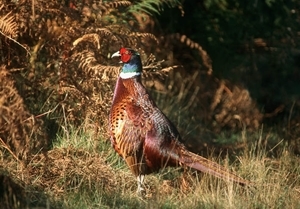 Taken together, the available evidence reviewed in this new report gives a good insight and a practical steer in relation to released pheasants and partridges, and invertebrates.
Their effects are best understood as localised and dependent on how birds are managed, rather than uniform across the wider landscape. Their interaction with insects is largely opportunistic, insects form a small part of their diet and are taken opportunistically, meaning their role as predators is limited under most conditions.
This shifts the focus away from broad, landscape-scale concerns about released gamebirds across the landscape, and towards specific situations where pressures can arise. In practice, this means attention should be directed at how birds are managed, particularly in areas where they may gather at higher densities, rather than their mere presence.
The data explored as part of this study suggests that current best-practice guidelines for releasing pheasants, in particular at 700–1,000 birds per hectare of pen, can help to manage potential impacts on invertebrates. By controlling release densities, carefully siting pens and feeders, and avoiding practices that cause birds to congregate in sensitive habitats, any negative effects can be minimised. It is reasonable to suggest the same principles can be applied to released partridge.
This reinforces the importance of good management. Where guidance is followed, impacts remain small and contained, providing a practical and evidence-based way to address risks without the need for broader restrictions.
Some knowledge gaps remain, particularly regarding how specialist invertebrates respond, how certain resources such as decaying wood may be affected, and how quickly communities recover after periods of higher bird density.
The review also highlights the wider contribution of gamebird management. Many of the habitats associated with releasing, including woodland rides, hedgerows, game crops and field margins, would not exist without it, and are well known to support insects and other wildlife at a landscape scale. It is likely therefore that best practice game management can deliver a biodiversity net gain for invertebrates.
Read the original report
Sage, R., et al. (2026). Do farm-reared and released pheasants and red-legged partridges affect ground invertebrate communities? Natural England Research Report Number NECR707.