Once you start looking, wild bees can be found nesting in an incredible variety of places, from bee hotels and garden walls to old tree trunks, riverbanks and patches of bare soil.
Growing awareness of initiatives such as No Mow May has encouraged many people to leave areas of grass longer and wilder. These tussocky grass habitats are far more valuable than they might first appear, providing shelter and nesting opportunities for a wide range of pollinators including the familiar buff-tailed bumblebee.
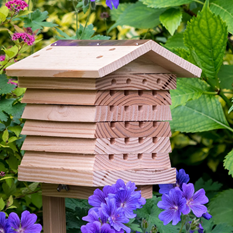 Solitary bees are however, are so easily overlooked. Often smaller, sometimes less charismatic than our honeybees and bumblebees it is understandable. But, they are everywhere! Dead wood, mature trees and even cracks in old walls can also offer vital nesting sites for specialist solitary bee species.
Take bee hotels, for example. They have become a hugely popular feature in gardens across the UK and provide a wonderful way for people to connect with wildlife on their doorstep. Mason Bees, Leafcutter Bees and a range of other cavity-nesting species readily use them, allowing us to watch these fascinating insects carrying pollen, mud and leaf fragments back to their nests throughout spring and summer.
But while bee hotels and wildflower-friendly gardening have brought many of these habitats into the spotlight, one of the most important bee nesting habitats often goes completely unnoticed.
The bee habitat beneath our feet
Around 70% of UK bee species nest underground. Mining bees, Furrow Bees and many others excavate tunnels into areas of bare, well-drained soil where they create chambers for their developing young.
These nests can be incredibly easy to miss. Often there is little more than a small hole in the ground, sometimes surrounded by a tiny mound of soil. Yet beneath the surface may lie a complex network of tunnels supporting dozens of developing bees.
The good news is that this is also one of the easiest habitats to help. Leaving small patches of bare ground, sunny banks or lightly vegetated soil can provide suitable nesting opportunities for a remarkable number of solitary bee species.

Shining a light on forgotten pollinators
This is where the Farmland Ecology Team's Solitary Bee Appeal comes in.
Ground-nesting bees remain one of the least recognised groups of pollinators despite making up the majority of our bee species. By creating bare soil habitats by scraping away vegetation in controlled plots, the project aims to build a better understanding of their use and efficacy of creating these habitats the bees depend upon.
Just as bee hotels helped introduce people to cavity-nesting bees and No Mow May highlighted the value of longer grass, we hope this appeal will raise awareness, improve our understand and optimise our habitat management on farmland and the wider countryside.
Every donation helps. Whether it covers the cost of equipment, fieldwork or the creation of the habitat itself – we can all help to bring the buzz back!
Support the Solitary Bee Appeal.