By Jayna Connelly, Science Communicator
Key Points
- Non-crop habitats scored 3–5× higher than crops for chick-food indices (a measure of chick food availability).
- In-crop plant diversity was a major limiting factor for insect availability.
- Broadleaf arable plant cover in crop fields is up to 8× lower in drier years.
- Established habitats delivered roughly double the Grey Partridge Chick Food Index that than of newer ones.
- Good habitat management is key to providing farmland wildlife resilience.
A testing year for insect populations
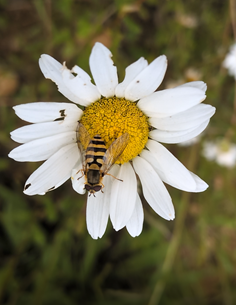 Across the farmland sites that the GWCT monitors for insects, 2025 will likely be remembered not simply as a poor year for insects, but as a revealing one. Prolonged dry conditions and increasingly erratic weather exposed important differences between farming systems, habitats, and management approaches. The year acted as a stress test, highlighting which habitats continued to support insect communities under pressure and which struggled to do so.
The GWCT Farmland Ecology Department monitors insects across a range of farming systems, using several complimentary collecting methods. A key technique is D-vac sampling, a standardised suction-sampling method that allows scientists to collect, identify and quantify insects from a defined area of vegetation. Critically, this allows our scientists to calculate indices developed by the GWCT such as The Grey Partridge Chick Food Index (CFI). These indices take the insect numbers and weight them based on how valuable they are for growing chicks, providing a more meaningful measure of habitat quality for farmland birds. The CFI has a threshold score of 0.7 to support grey partridge chicks.
The picture that emerged from 2025 was not solely of declining insect abundance. Instead, it highlighted important questions around resilience. As weather conditions become increasingly unpredictable, which habitats continue to function when conditions deteriorate, and which habitats fail.
Lessons learned from the data:
1. Weather extremes are reshaping insect communities
Weather has always influenced insect populations, but recent years show just how sensitive farmland ecosystems are to climatic extremes. Data from multiple monitoring programmes show that 2020 and 2021 were among the lowest years for invertebrate numbers across the UK, following a sequence of hot, dry springs, late frosts and heavy rainfall. Although some recovery has occurred since then, populations remain below pre-2020 levels. The conditions experienced in 2025 fit within the wider pattern of instability. Many insect groups showed reduced abundance, particularly moisture-dependent taxa such as some flies and soil-associated invertebrates.
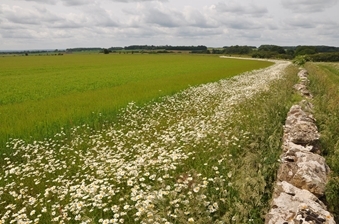 Weather affects insects both directly and indirectly. Extended drought reduces the germination and survival of arable plants, while unusually warm spring conditions can shift the timing of insect emergence, potentially disrupting the synchrony between insect availability and breeding season of birds, like grey partridge, whose chicks are dependent on insects.
On one monitored site, broadleaf plant cover within crops in 2025 was up to eight times lower than in wetter years and was often dominated by just two or three drought-resilient species. Such simplified plant communities provide fewer resources for insects and support less diverse food webs.
It could be that the repeated weather extremes of recent years are having cumulative effect on insect communities. Populations do not have sufficient time to recover between bad years. Rather than a single dramatic collapse, the pattern observed by 2025 appears to be one of repeated climatic shocks, reducing resilience and leaving insect communities increasingly vulnerable.
2. Contrasting findings from cropped and non‑cropped habitats
One of the clearest findings from 2025 was that not all habitats performed equally across farmland. Across the monitored farms, non-crop features including field margins, flower-rich strips, hedgerows, and semi-permanent habitats consistently supported higher insect numbers overall and more of the key groups that are the prey of farmland birds.
Most notably, these non-cropped habitats produced CFI scores that were three to five times higher than those recorded in cropped areas, with half of non-crop habitats exceeding the required 0.7 CFI threshold to provide stable grey partridge numbers. Even when overall insect abundance was lower, these non-crop habitats continued to provide key insect groups to support farmland bird chicks, such as weevils, hoppers, and the caterpillars of butterflies and moths. By contrast, less than a quarter of cropped fields reached the GPCFI threshold 0.7.
Even where organic or lower‑input systems performed relatively well in terms of insect numbers, cropped areas alone were often unable to provide sufficient chick-food resources. A key factor here is the detailed management practices and low tolerance of in-field arable plants (weeds), as many organic fields have “clean” crops with minimal weed tolerance. Farms with higher weed tolerance are far more likely to meet the CFI threshold in the cropped as well as the non-cropped habitats, as arable weeds provide resources that support many chick food insects.
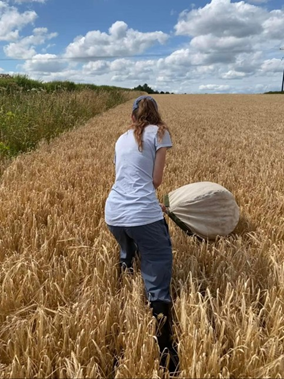 This pattern was reinforced by research on breeding corn buntings. Unlike the D-vac studies, the corn bunting project uses vegetation sweep-netting and chick faecal analysis to compare insect availability with the prey consumed by chicks. Despite the different methodology, the same conclusions emerged: non-crop habitats consistently provided richer and more suitable insect resources than cropped fields. As caterpillars, one of the preferred items that corn buntings feed to their chicks, were only available in small numbers, (likely due to dry conditions), adult corn bunting compensated by feeding chicks more spiders, harvestmen, and even grain. Unfortunately the result was that corn bunting chicks showed stunted growth and reduced survival. While this alternative prey helped buffer the low numbers of caterpillars, they are lower-value food sources, lacking the protein needed for rapid chick development. This highlights an important nuance, even where overall insect availability appears adequate, food quality (not just quantity) determines avian breeding success.
Overall, findings from 2025 showed that non-crop habitats contained higher numbers of nearly all key chick-food groups, including caterpillars, spiders, harvestmen and flies, particularly on conventional farms. In contrast, cropped fields often showed lower diversity. For example, in some cases, high insect counts were driven by a single dominant group, such as aphids, inflating overall numbers but providing limited ecological value. This distinction is critical. It is not the total number of insects that matters most, but the presence of insects providing a wide variety of ecological services .
3. Established habitats proved more resilient
Another consistent finding was the beneficial effect of habitat age and continuity. Well-established habitats supported roughly double the chick-food index value of newly created ones. As vegetation structures develop, plant diversity often increases, soil conditions improve, and the habitat remains less disturbed, insect communities become richer and more stable.
One sampling site illustrated this process clearly. In-field strips of wildflower and shrub habitats increased the CFI score from ~0.6 in 2023 to ~1.2 by 2025.This reflects the time needed for vegetation structure and invertebrate communities to develop.
Across monitored sites more broadly:
- Newly established habitats typically scored ~0.3–0.6 (CFI)
- Older, well-established habitats ranged between ~0.7 and 1.4+ (CFI)
- The chick food resources in cropped areas, inherently less than a year old, generally remained much lower, at ~0.1–0.3 (CFI)
These differences show the benefit of maintaining well-managed non-crop habitats for several years.
Managing farmland for resilience
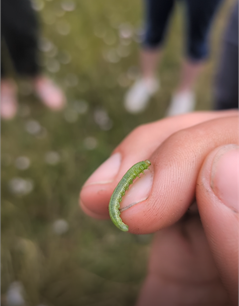 The findings from 2025 reinforce a long-established ecological principle: plant diversity drives insect diversity. Habitats with lower insect indices values can be linked to low arable plant diversity, with many insect groups depending on key “weed” species for food and shelter that simply weren’t available. Where the plant diversity doesn’t meet their requirements, insect abundance is low. Beyond providing chick-food, healthy insect populations across the farm support ecosystem services such as pest control (by eating aphids, slugs, weeds etc.) and pollination. Plant diversity is particularly important for pollinators as it determines the spread of flowering times across the year – minimising the “hungry gap” for insects and in turn birds. Therefore, providing a diverse range of semi-natural habitats with good habitat management is crucial to support farmland insect and bird populations. Farm management options such as flower strips, agroforestry, and varied cultivation approaches (such as minimising soil disturbance) can provide important refuges during extreme weather, helping insect populations persist in more intensively managed landscapes. Additionally, investing in high quality seed mixes for margins such as the Grey Partridge mix can improve the longevity of these habitats. Native, soil appropriate seeds establish better, fend off weeds and grasses longer and require a “fresh start” less often.
Support through schemes like Sustainable Farming Incentive (SFI) and other government-backed initiatives is key in enabling these features to be established and maintained as part of working farms. Where this support translates into consistent, long-term management, the benefits quickly become evident.
This is a not a one-size fits all policy, ultimately there is a place for many different farming approaches across the countryside. However, some key principles can be considered throughout including:
- Maintaining and protecting established habitats.
- Accepting a degree of arable plant diversity within crops.
- Optimising the quality of non-crop habitats via appropriate flora and creating a network of features at landscape scale.
The most effective systems are those tailored to local conditions, combining practical farming with ecological principles.
By shifting our focus from short-term abundance to long-term resilience, farms that invest in mosaiced, well-connected and well-established habitats are better equipped to withstand poor insect years and are ready to recover when conditions improve.
GWCT’s long-term monitoring projects continue to provide evidence of the impacts of these different management strategies on insects through time. This robust, real-world data can help farmers fine-tune their managements, while also demonstrating to policymakers and taxpayers that investment in schemes like SFI can deliver measurable benefits, supporting both agricultural productivity and wildlife conservation across the farming landscape.
Photo 1 - Hoverfly - Jayna Connelly
Photo 4 - Caterpillar - Jayna Connelly