By Dr Andrew Hoodless, Director of Research, GWCT
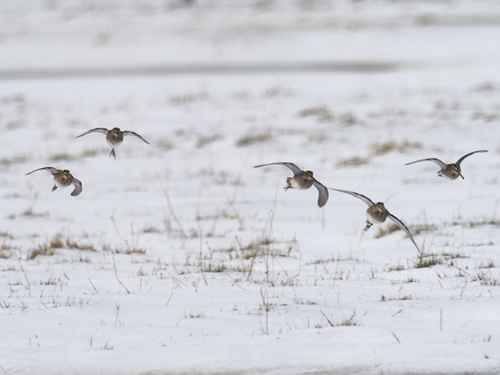 A wisp of snipe by David Tipling
In a groundbreaking step for bird conservation, our new migration study on the common snipe is underway. While much research has focused on Eurasian woodcock, there is still a lot to learn about the snipe - a bird still on the quarry list in the UK - which remains a mystery in terms of its migratory patterns and wintering populations. This project aims to change that.
Why study snipe migration?
Despite large numbers wintering in the UK, little is known about where snipe come from or how many arrive. Understanding their migration is the first step toward informed conservation. With advances in technology, researchers can now track small birds like snipe across continents, offering unprecedented insight into their journeys.
Tagging across the Isles
Tagging sites were strategically chosen in Cornwall, Ireland, and eastern Scotland to capture a broad spread of birds potentially originating from Iceland, Scandinavia, and Russia. These locations will help determine if regional differences exist in the UK’s wintering snipe populations.
The technology behind the tracking
The project uses ultra-lightweight satellite tags that register and transmit their location regularly. GPS tags using mobile phone networks are also being trialed, offering cheaper data transmission and potentially more detailed tracking. All tagging is licensed through the British Trust for Ornithology (BTO), ensuring minimal impact on the birds. Tags must weigh less than 3% of the bird’s body weight and be aerodynamically suitable.
Challenges in the field
Snipe are notoriously secretive, often feeding in open areas at night. Successful tagging relies on expert fieldwork, including lamping and mist-netting in known feeding areas. Weather plays a role too, with wetter, rougher nights improving the chances of catching birds with a lamp, but calm conditions required for mist-netting.
What we hope to learn
We aim to get a better understanding of:
- Migration routes and stopover patterns
- The effect of prevailing weather on migration timing and routes
- Differences in origins between birds tagged in different UK regions
- Interestingly, we are finding that some birds are departing later than expected, with routes that include detours through Ireland or across Scotland before reaching Iceland. These findings suggest that prior experience and weather conditions heavily influence migration paths.
Conservation implications
While it’s early days, the data could inform future conservation strategies. Understanding habitat preferences and migration routes may help identify critical areas for protection. For example, Iceland remains a stronghold for breeding waders, but agricultural intensification could pose future threats.
Collaborations and future plans
The project hopes to engage shooters, landowners, and international researchers — especially in France and Iceland — to expand tagging efforts. Landowners play a key role in habitat management, and the data could guide best practices for preserving wetland areas.
Sharing the journey
Plans are in place to make the tracking data publicly accessible via a dedicated website. This transparency will support scientific publications and help engage policymakers like Defra and Natural England in habitat management discussions.
Final thoughts
This study marks a significant step toward understanding the elusive snipe. As data accumulates over the coming years, it promises to shed light on migration mysteries and guide conservation efforts for one of Britain’s most secretive winter visitors.
Support the snipe appeal
You can play a role in helping to reveal the secrets of the snipe. In the run up to Christmas the GWCT is running a Snipe Appeal to raise funds for this vital project. By contributing, you could help fund the technology and expertise needed to reveal the hidden life of the common snipe and ensure they remain part of our wild world for generations to come.