Written by Jayna Connelly, Science Communicator
Our Farmland Ecology team work tirelessly through Spring and Summer surveying insect biodiversity on farmland across the country. It’s easy to forget that their work doesn’t stop over winter. Every year when most of our farmland wildlife is hidden away, our scientists are faced with a wall of samples collected over summer to provide deeper insights in to the dynamics of biodiversity in different farming systems. Every day the team works tirelessly identifying, counting, analysing the contents of these insect samples and writing up the results.
Largely these projects focus on key groups such as pollinators, natural enemies (insects that eat pest insects) or generally add up to provide crucial insect food items for farmland birds and their young. But beneath the surface, and often hidden in the foliage, lives a remarkable array of insects quietly shaping the health and balance of our agricultural landscapes. These unsung heroes often provide ecosystem services in their own right and others are simply indicators of a thriving, diverse ecosystem. Here are six species that deserve a moment in the spotlight.
14‑spot ladybird: the pixelated pest controller
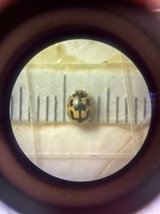 The 14‑spot ladybird is one of the farmland’s most distinctive beetles, with its bright yellow body and square black spots. It is one of three yellow ladybird species in the UK. Unlike most ladybirds its spots are distinctly more square than round, making in look like it’s right out of a video game, rather than our local countryside. It’s found in a variety of habitats from woodlands, grasslands, arable and towns. Like its red cousins, it is a voracious predator of aphids, whiteflies and other soft‑bodied pests that can damage crops. Its appetite makes it a natural ally to farmers, helping to keep pest populations in check without the need for chemical intervention. Finding 14‑spots in hedgerows, field margins or cover crops is usually a sign that the natural pest‑control system is working well.
Anthocoridae: the “minute pirate bugs”
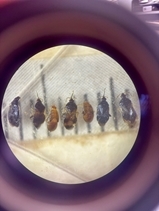 Anthocorids may be tiny, often only a few millimetres long, but they punch well above their weight. These black and white bugs have piercing mouth parts you can sometimes spot protruding from their head when hunting or folded beneath their bodies. Sometimes called “minute pirate bugs,” these insects are agile predators that feed on aphids, mites, thrips and even the eggs of other insects. Their presence in crops and margins is a strong indicator of a functioning natural enemy community. Because they thrive in structurally diverse habitats, they benefit from hedgerows, flower strips and reduced pesticide use. In many ways, anthocorids are the quiet workforce of integrated pest management.
Coreus marginatus: your local weed management system
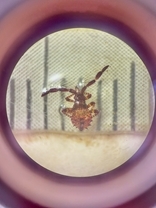 The dock bug, Coreus marginatus, is large, and unsurprisingly found on docks, sorrels and other broad‑leaved plants. Sometimes mistaken as a shield bug, these a part of a different group with a distinctive skirt shape and mottled brownish colouring. Widespread across a range of habitats, they are not considered a crop pest. In fact, by feeding on dock and similar weeds, it plays a small but useful role in regulating non‑crop vegetation. Its presence also adds to the structural diversity of the insect community, providing food for predators such as birds and spiders. The dock bug is a reminder that not all plant‑feeding insects are harmful, many simply occupy their own niche within the wider farmland web.
Robberflies: the aerial hunters of open farmland
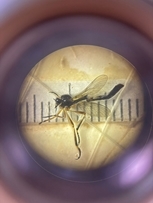 Robberflies are among the farmland’s most formidable predators. With their strong flight, piercing mouthparts and keen eyesight, they hunt other insects on the wing, including flies, beetles and even other predators. This image is of a likely Leptogaster cylindrica. Found in grassy habitats, you can spot it flying slowly as it plucks aphids from the grass. Their presence is a sign of a healthy, insect‑rich environment, as they rely on abundant prey and open, sunny habitats such as field margins, grassland and lightly grazed pasture. Robberflies help regulate insect populations and contribute to the natural balance that underpins resilient farmland ecosystems.
Chalcid wasps: small but mighty
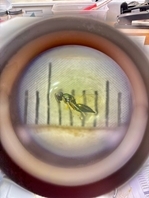 Chalcid wasps are almost impossibly small, probably often dismissed as midges, but their ecological role is enormous.. Most species are parasitoids, laying their eggs inside the larvae or pupae of other insects. When the young wasps hatch, they consume their host from within, preventing it from reaching adulthood. This may sound gruesome, but it is one of nature’s most effective pest‑control strategies. Chalcids help suppress populations of aphids, flies, beetles, moths and other potential crop pests, making them a vital part of the farmland’s natural defence system.
Noxotus monocerus: the unicorn beetle hiding in the mould
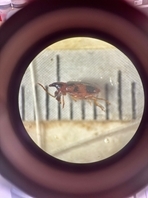 Perhaps the most unusual of the group is Noxotus monocerus, a small, mould‑loving beetle with a distinctive horn‑like projection rising from its thorax. Its name draws on a unicorn‑like creature from Greek mythology, and it certainly lives up to that sense of rarity. These beetles are inconspicuous and easily overlooked, yet they are unlike almost anything else found in UK farmland. By feeding on moulds and decaying organic matter, they help break down dead plant material and recycle nutrients back into the soil. Their presence hints at a well‑functioning detritivore community, an essential but often forgotten part of soil health.
Supporting insects matters
Together, these species illustrate the complexity and richness of farmland ecosystems. Their diversity is a sign of a landscape that supports life at many levels, from the soil surface to the canopy.
Findings from our long-term in-crop sampling show that organic fields are often supporting more abundant and diverse insect communities than conventional ones. However, the picture is rarely that simple, farmland is hit with challenges such as abnormally wet, warm winters and sometimes extreme draught to name just a small portion of the challenges our countryside faces. Often both organic and conventional fields often still fall well below the threshold needed to provide enough food for farmland bird chicks.
This highlights that even where farming systems are already delivering benefits, there is still considerable room for improvement in the resources available to wildlife. Often the only areas that reach the insect food abundance required are the non-crop habitats. Features such as hedgerows, flower margins, beetle banks and other semi-natural habitats provide structural complexity and year-round shelter that many insects need. These areas act as reservoirs for natural enemies like anthocorids and chalcid wasps, decomposers like Notoxus monocerus, as well as predators such as robberflies, all of which contribute to healthier, more resilient farmland. These populations then spill over into surrounding cropland, supporting natural pest control, nutrient cycling and food availability for birds.
Encouraging these insects through thoughtful habitat management, reduced pesticide use, and more diverse cropping systems strengthens the natural resilience of farmland and reduces reliance on artificial inputs. Our skilled entomologists study these species not only to understand the health of our fields today, but to guide how we can design farming systems that support richer biodiversity, and the ecosystem services it provides, long into the future.
All images featured above were provided by Dr Juliet Turner.