Written by Ross MacLeod, Head of Policy (Scotland)
In ‘A Question of Balance’ edited by the Trust’s Dr Stephen Tapper in 1999, a section on the wildcat comments on past persecution but speculates whether the effect of protection under the Wildlife and Countryside Act may simply have alienated gamekeepers and increased resentment of conservation activities.
The section goes on to note that, ironically, the species tended to be more numerous within its current range in the Eastern Highlands of Scotland where game interests are high. It also describes contemporary issues around disease transmission between domestic cats and wildcats, hybridisation, poor habitat quality of commercial forests, and separation of the current population from further areas of potential range expansion.
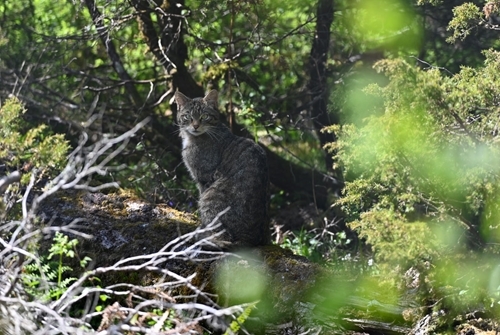 Credit: Saving Wildcats
Whatever the reasons for the further decline in wildcat numbers since the turn of the century, the International Union for Conservation of Nature (IUCN) reported in 2019 that there was no longer a viable population living wild in Scotland, with extinction highly likely without carefully planned releases. This led to the establishment of the Saving Wildcats recovery partnership project in 2020, run by the Royal Zoological Society of Scotland.
Initial wildcat releases took place in the Strathspey area during 2023. Since then, further releases have continued and the first wild-born wildcat kittens have been recorded. The released cats are tracked using GPS-radio collars.
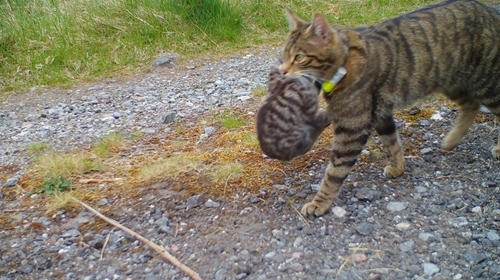 Credit: Saving Wildcats
The programme experienced initial complications, with some released wildcats finding their way into domestic poultry runs and gamebird release pens. These predation impacts affected communication with land managers fostered in advance of the releases, and in at least one case, led to the abandonment of a syndicate shoot. Whilst the predation impacts do not appear to have been as significant over the last year, they highlight the need to pay close attention to human-species conflict resolution.
Later this year, the Game & Wildlife Conservation Trust will therefore be working with the partnership project to develop fair co-existence between wildcats and people. GWCT will liaise with estates and practitioners in the wildcat release area to facilitate tracking and develop best practice guidance to mitigate gamebird impacts. The Trust also aims to build evidence recording to support licensing needs, engaging with key partners, communities and government agencies. The project will also monitor for impacts on other species such as waders, grouse and capercaillie. Throughout the initiative, our aim is to ensure that the benefits deriving from game management balance sustainable, economic land use with wider biodiversity objectives.
You can read more about this year’s wild kitten births on the Saving Wildcats website.