By Dr Alastair Leake, GWCT Allerton Project director
 “The current approach to the Emergency Authorisation of pesticides in the UK is not fit for purpose.” So says a new report by the Pesticide Action Network (PAN), citing that perpetual “emergency” authorisations conflict with the legislation, which states that the circumstances for use must be unforeseen: if it has happened before it cannot be so.
PAN goes on to say: “The system which is supposed to be in place for genuine emergencies only – is weak and being misused.”
We agree, because it is fundamentally weak, it is not being used as was intended and therefore needs to be strengthened.
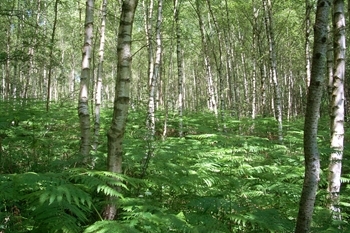
Let me illustrate my point. Until recently the only selective herbicide available for the control of bracken was a product called Asulam. Asulam has been around for a very long time, and is used globally, particularly for weed control in sugar cane.
As required by EU law, periodically all crop protection products come up for regulatory review, and during the last review, over a decade ago now, the levels of one breakdown product of the herbicide, found in samples of spinach in Germany, caused regulators to ask the sole manufacturer for more data.
This was the beginning of the problem.
Since Asulam is not widely used on food crops and because other alternatives are available, the manufacturer made the commercial decision not to pursue reregistration in Europe, and Asulam ceased to become available. This meant an end to the selective treatment of bracken (selective meaning the herbicide only kills the bracken and not, for example, the grass understory) leaving only non-chemical management (I use that term rather than control, as the effectiveness of such measures are weak), or resort to glyphosate, which is a non-selective herbicide which kills all vegetation and viewed as universally undesirable.
Unfortunately, the area of bracken treated is tiny compared to the areas of global crops such as maize, rice and wheat, which makes the cost of re-registering unviable, further exacerbated by bracken being a largely British, not European problem.
To deal with this withdrawal, land managers looked to obtain an emergency authorisation (EA) for the use of Asulam to control bracken. As PAN observe in their report, EAs are usually submitted to the Expert Committee on Pesticides (ECP) for review, but there is a requirement to demonstrate universal need, rather than an EA being submitted by an individual applicant who might gain some commercial advantage from it. Hence the need for multi-actor representation.
I was a member of the ECP when the application for the EA for Asulam on bracken came in. One thing struck me immediately about the application – it wasn’t just a group of farmers who were asking for this, but from a cross section of society.
Here are some of organisations and the reasons I can recall:
- Water companies with reservoirs adjacent to large stands of bracken. Bracken releases toxic spores, which can get blown into reservoirs, contaminating the water, and leachate from bracken roots has been shown to be toxic and carcinogenic.
- Ramblers, horse riders and cyclists. Bracken encroaching on footpaths provides refuge for ticks, which latch onto passers-by, potentially carrying nasty diseases, including Lymes disease and Louping ill.
- Archeological heritage organisations seeking to protect ancient structures, both above and below ground.
- Nature conservation organisations wishing to protect rare flora and fauna from being swamped or encroaching on rare habitats including SSSIs; and people concerned about tick infestations to wild animals and birds.
- Farmers, landowners and graziers seeking enough grass for their livestock to graze.
- Foresters nursing new plantations where bracken can smother the young saplings.
These groups can no longer use Asulam to control bracken because its registration for use on edible crops has ended, ruling out its use in non-crop settings, leaving nature, human health and animal welfare all compromised. Ironically, anyone foolishly eating herbicide-treated bracken would succumb to the plant’s own toxins long before the herbicide residues exhibited any adverse effect.
After a series of consecutive EAs, the use of Asulam has now been withdrawn. The EA system is weak because it doesn’t permit the use of science and logic in its application, and on this basis we agree with PAN – it needs reforming, but for the better, not just to meet ill-conceived rules.