Senior advisor Mike Swan visits two small shoots in Cornwall for Guns on Pegs MD Digby Taylor and Podcaster Avian Sandercock for the Shoot Hub podcast.
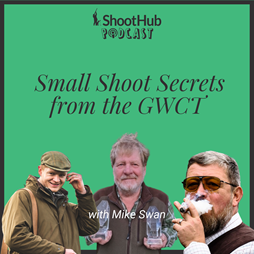 With gamebird releasing under greater scrutiny than ever, now is the perfect time to call on GWCT advisory to give your shoot a health check and suggest improvements to guarantee high welfare standards, a biodiversity net gain, and better drives. Guns On Pegs' MD, Digby Taylor and his chum Avian Sandercock both seized the opportunity when they asked Mike Swan, who has spent more than 40 years visiting shoots for the GWCT, for his advice on improving their small shoots in Cornwall.
In the first of a two-part series on the Shoot Hub podcast, Mike explained that any advisory visit starts with a questionnaire sent out beforehand to establish whether the shoot has any designations, something that can be easily verified using the Magic Map system. He also asked for a map with contours on it, to help him visualise high points and low points where the guns might stand, where the cover crop might go and how things relate to one another. Mike said, “The most important thing, is understanding your aspiration. It's what you want out of your little shoot, that hopefully I can help you, advise you on how to deliver.”
The first podcast focuses on woodland and release pen management. Having only 110 birds in under half an acre of pen, Digby was within the guidelines of the Code of Good Shooting Practice, but Mike told him to open the gates. By around 14 weeks, Digby's poults were leaving the pen to roost, yet he was still trying to put them back in. Mike's advice: leave the doors open, pull the feeders out and ‘leapfrog’ them, taking the nearest one over the others and further away each time. Take birds where you want them to go by feeding, rather than trying to hold them back.
Mike explains that the Code of Good Shooting Practice sets 400 birds to the acre (1,000 per hectare), but what matters is the total ‘bird days’ of use. The longer pheasants are confined, the more you risk habitat damage, health problems and parasites carrying over to next year.
Another tip is not to clip. When Mike started, everyone clipped their pheasants to keep them from flying out of the pen. Today almost nobody does, because with so many more birds of prey about, grounded birds are more vulnerable.
He advised that habitat in and around the pen should be a third open and sunny, a third low cover and a third low roosting, from 6-12 or 15 feet. Build the pen slightly bigger than you need, look after the habitat and it should last for years.
Book a visit from the shoot doctor
Mike describes the GWCT advisory service as a GP for your shoot: you get a broad knowledge of the whole picture. The advice is tailored to your place, and once you've had a visit, follow-up questions are free. You also benefit from years of experience. Mike said, “It’s a continuous knowledge exchange, we are always learning from the shoots we visit.” Digby encourages all shoots to book a GWCT visit. He said, “I cannot recommend enough having someone like Mike from the GWCT come to look at your shoot, because the things you learn about the land that you live on, that have been lost, are absolutely fascinating.”
To arrange a visit, email advisory@gwct.org.uk or visit gwct.org.uk.
To hear how Digby and Avian benefitted from more top tips on coppicing, ride management, approach to ash dieback, uncultivable cover crop plots, replacing release pens and a host of other issues, Listen to the full episode on Spotify.