Written by Leah Cloonan, Uplands Advisor.
This spring marks a major step forward for our “Factors influencing maternal condition in red grouse and subsequent breeding success” research project. Running since 2022, this work has now been expanded into the Scottish Highlands after we secured additional funding—and fieldwork is already under way.
In March, we successfully caught and tagged 60 hens across four long-standing study sites in the North Pennines, and 51 hens across four new sites in the Scottish Highlands. This marks the start of a busy field season for everyone involved.
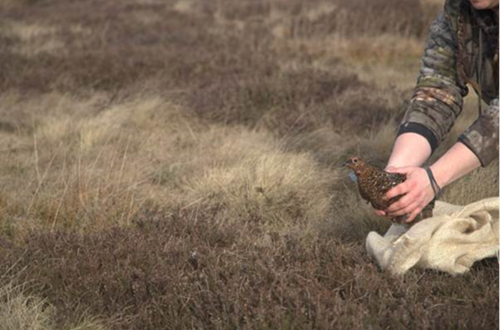
The upland research team will monitor the breeding outcomes of these hens each week. This involves radio tracking manually on foot for hens fitted with VHF radio collars and this year we are also trialling the use of GPS tags. Subsequently, four hens across three of our Scottish study sites have been fitted with ‘backpack style’ GPS devices. This new addition is already giving us a far more detailed picture of movements and habitat use than is possible with VHF tracking alone. As the season progresses, we will monitor how movement patterns shift through incubation and brood-rearing, how far hens travel with chicks to access suitable cover and food, and whether these behaviours are linked to chick survival.
When the hens are caught, we collect data on body mass, size and condition along with caecal samples so that we can assess the prevalence and intensity of strongyle worm infection. Alongside hen body condition and breeding success, we also collect a wide range of environmental data such as habitat type, altitude, and weather.
Vegetation, in particular heather shoots and cotton grass flowers are important food sources for red grouse. Therefore, we measure cotton grass emergence and abundance and collect samples of heather and cotton grass flowerheads to assess their nutrient content. Alongside this, we monitor the emergence and abundance of craneflies which are a critical food source for growing grouse chicks in their first few weeks of life.
Late April marks the start of nest locating in northern England, with Scotland typically a week or two behind due to local climatic conditions. This is a particularly rewarding stage of the field season as we start to get an early indication of clutch sizes, and we monitor these until they hatch. The coming days should provide a first glimpse of how these measures align.
Why this project matters
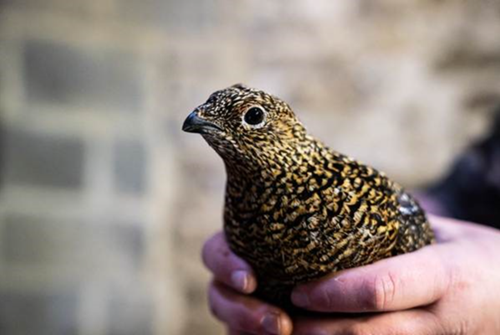
Red grouse populations are well known for pronounced multiannual fluctuations, with ‘cycles’ in abundance often linked to parasite burdens. By identifying additional drivers of maternal condition and productivity, this project will help to explain:
- Why some years produce large broods where others fail
- How weather, food availability and nutrition, habitat and management influence breeding outcomes
- Whether targeted interventions could improve chick survival and population stability
Subject to further funding, we hope to extend the study again - potentially to further sites in the Scottish Borders. Running the project across multiple regions will allow us to test for regional drivers of breeding success, from spring temperatures, snow-cover duration, rainfall, and the timing of heather growth, to underlying geology, phenology, predation pressure and local management practices.
This work would not be possible without the funding and support of our membership and the hosting estates. We would like to thank the estates and gamekeepers across all the study sites. Their practical support and local knowledge are essential to delivering this valuable research.