A year into his role as director of GWCT Scotland, Dr Nick Hesford is on a mission to ensure that science, not political assumption, determines the fate of our most cherished landscapes.
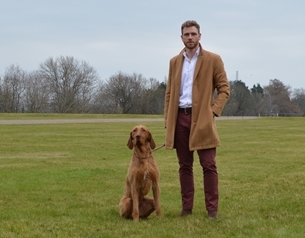 Living and working in rural Scotland, I spend a lot of my time outdoors. I shoot occasionally, pheasants and partridge mostly, and I also enjoy stalking, which in the Scottish Borders tends to be roe deer. One of the main draws for me is working the dogs. For me, rough shooting is where the strongest connection to the land is felt: reading the wind and ground, watching the dog hunt, and experiencing that moment of anticipation when he goes on point and everything is about to happen. Few things in the countryside are as absorbing as that shared moment between me, my dog and the particular landscape we are in.
It feels strange, now, to think that I didn’t grow up with field sports. Born in the USA and raised on the outskirts of Manchester, my early connections to the countryside were limited but no less formative. A short walk from home led to the Cheshire countryside, while visits to my grandparents in rural Bedfordshire offered space and wildness I couldn’t find in the suburbs. I remember building hay bale hides with my grandmother to watch badgers emerge from their setts at night, as well as helping my uncles butcher muntjac on my visits south. These early adventures sparked a fascination with wildlife and the countryside, a curiosity that has shaped my career ever since.
 Dogs were always part of our family life, terriers and spaniels mostly, though they were hardly the most formidable hunting companions. Even so, they instilled in me a lasting interest in animals. That curiosity stayed with me and led me to study Zoology at Cardiff University, where I was particularly interested, not just in wildlife in isolation, but in understanding how species can thrive within human dominated landscapes.
That interest in applied conservation drew me to a year-long student placement with the Game & Wildlife Conservation Trust (GWCT) as part of my bachelor’s degree. I worked with Dr Rufus Sage, Head of Lowland Gamebird Research, and Dr Roger Draycott, now GWCT’s Director of Advisory. My autumn and winter were spent at the GWCT’s headquarters in Hampshire, tracking woodcock at night and red-legged partridges by day. In the spring I moved to Suffolk to work on pheasants in East Anglia. Working alongside gamekeepers and GWCT scientists I saw, first-hand, how practical habitat management and careful monitoring can have tangible conservation benefits. It was during this period, while lamping foxes on a wild grey partridge shoot, that the connection between fieldsports and practical conservation truly clicked into place, and I realised that if I stayed in research, it had to be applied.
After Cardiff, I completed a PhD at Queen’s University Belfast, researching farmland ecology in a changing agricultural landscape. The PhD taught me a lot, but it also reminded me how much I valued hands-on, practical conservation. So when it came to writing up my thesis, I worked part-time as a gamekeeper with family in the Scottish Borders.
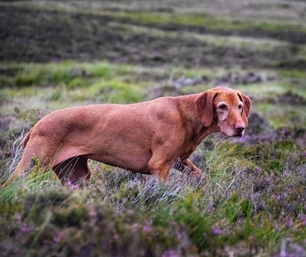
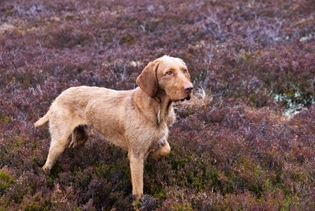
Shortly after graduating, I started work for a rewilding charity, gaining hands-on experience in habitat restoration and a different perspective on land management, before returning to the GWCT to join the Uplands Research Team under Dr Dave Baines. With my team of Hungarian vizslas at my side, I was tasked with expanding the GWCT’s long term red grouse monitoring programme, carrying out pair and brood counts across research sites throughout Scotland.
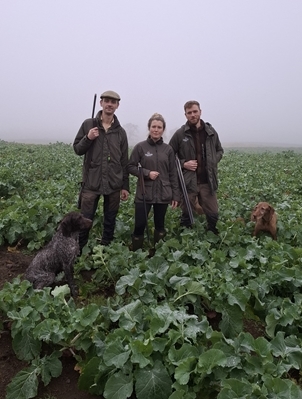 My work at this time also spanned black grouse, waders, and even occasionally capercaillie, but mountain hares became a particular focus. What I enjoyed most, however, was seeing the tangible results of careful, evidence-based management on the ground. At the same time, I became increasingly aware of how legislation shapes what is possible.
The Scottish Government’s Stage 3 amendment resulting in a ban on mountain hare hunting, introduced without robust evidence, underlined for me the important role that science needs to play in informing policy. Naturally, perhaps, my focus then broadened from research into advisory work, and I eventually led the GWCT Scotland advisory team, supporting landowners and managers as they navigated an increasingly complex regulatory landscape.
I believe that blend of research, advisory, and field experience now shapes how I approach my role as director of GWCT Scotland and how we tackle the challenges facing Scotland’s countryside.
Looking ahead
Today the Scottish uplands sit at a crossroads. They are among our most iconic and internationally important landscapes, delivering biodiversity, carbon storage, water regulation, food production and cultural heritage. Yet they are also increasingly fragile, under growing political, social, and environmental pressure. Policy change, shifting public attitudes, climate impacts, and tightening regulation are all reshaping what is possible on the ground, often at pace and sometimes without the benefit of robust evidence.
Against this backdrop, the GWCT’s long-term upland monitoring has never been more important. Our red grouse counts, some of the longest-running datasets of their kind anywhere in the world, are revealing just how vulnerable many moors have become. In spring 2025, our pair counts recorded a 35% decline across our annual monitoring sites, reflecting the poor 2024 breeding season and successive years of weak productivity on some estates. While grouse numbers have always fluctuated, the scale and persistence of recent declines raise serious questions about resilience under current pressures.
 Understanding what is driving these declines is central to our work. Traditional management tools, such as muirburn and predator control, are increasingly constrained, yet grouse productivity is shaped by a complex interaction between nutrition, disease, weather and habitat. To address this, we are expanding our core uplands research through the Maternal Grouse Project, a large-scale field study designed to untangle how these factors combine to influence hen condition, egg quality, chick survival, and overall productivity. Grouse nutrition remains one of the least understood, yet potentially most influential, components of this system, and this work is focused on delivering practical, evidence-based guidance that estates can apply on the ground.
At the same time, we are looking ahead. In collaboration with The Heather Trust, our Future Moors project is a major new initiative designed to quantify the ecosystem services delivered by traditional moorland management and to model how these landscapes might change under different policy and climate scenarios. As public funding for farming and conservation continues to tighten, alternative models that can support nature recovery, including grouse moor management, will need to demonstrate their effectiveness in meeting government biodiversity and climate targets. Future Moors is about ensuring that decisions affecting the uplands are informed by transparent, quantitative evidence, rather than assumption.
Research alone, however, is not enough. Increasingly, land managers need support navigating complex and evolving regulation. Through the GWCT’s advisory team, we work directly with estates across Scotland and northern England, helping them document responsible management and meet emerging regulatory requirements. Our muirburn advisory services, for example, are supporting land managers through a new licensing system by using spatial data to target peat depth surveys and build an evidence base required for licence applications.
 Gamebird health monitoring remains another cornerstone of this work. Our data shows an increase in louping-ill virus prevalence in parts of the UK, underlining the growing importance of tick control and the urgent need for a new vaccine. The GWCT has supported the Moredun Research Institute in the development of that vaccine, contributing data, analysis, and support with fundraising. Crucially, our long-term monitoring also shows that disease is rarely the whole story: some moors can support shootable surpluses despite high tick burdens, while others struggle even at low levels. Understanding how nutrition, disease, habitat, and weather interact to influence resilience is now one of the most pressing challenges facing grouse management.
This is where the GWCT is uniquely placed. No other organisation operates at the intersection of science, practical land management, and policy advice. Whether building haybale hides in Bedfordshire, tracking woodcock and partridges in Hampshire, or monitoring grouse across Scotland, my career has been shaped by observing wildlife and the landscapes within which they thrive. That same approach is central to the GWCT’s work. Our strength lies in taking evidence from the field, translating it into practical guidance, and ensuring it informs decision-making at every level.
In an era of rapid change and increasing scrutiny, that role has never been more important. Not just for the future of fieldsports, but for the future of conservation within productive, working landscapes.