By Saya Harvey, Allerton Farm Advisor
Welcome water
Climate change continues to create challenges for British farms but sometimes the weather turns just in time and you have lots of happy farmers! Last week as the summer arrived in full glory, and with highs of 32 degrees we were starting to worry for the spring crops. Growth was slowing down and everything looked a bit stressed, but on Tuesday evening the heavens opened to deliver us a whopping 26mm of rain in one evening. A big sigh of relief for the crops but also for all of the agri-environment strips and plots that have recently been drilled.
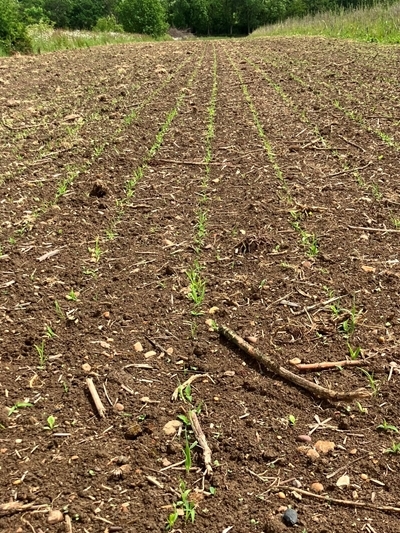 Wild bird seed mix
Our seed supplier, Frontier, recommend drilling wild bird seed mixes in June, when soil temperatures are high enough to encourage quick germination. However, it is a fine balance between temperature and available moisture, which isn’t always achieved. This year I think we will have a fine crop of wild bird seed to feed our yellowhammers, greenfinches, blue tits and many more.
Hybrid wheat trial
The Allerton Project has a long-term field trial with Syngenta to compare different types of tillage from full inversion to direct drilling. As part of the project, we are trialling different bio stimulants, which are biologically derived products applied to seeds, plants or soils to improve natural processes such as yield and quality, tolerance to drought, defence against disease or pests, and nutrient uptake. We are also testing novel nutrient products to improve plant development and this year we have some hybrid wheat, which is impressively named X-Terra!
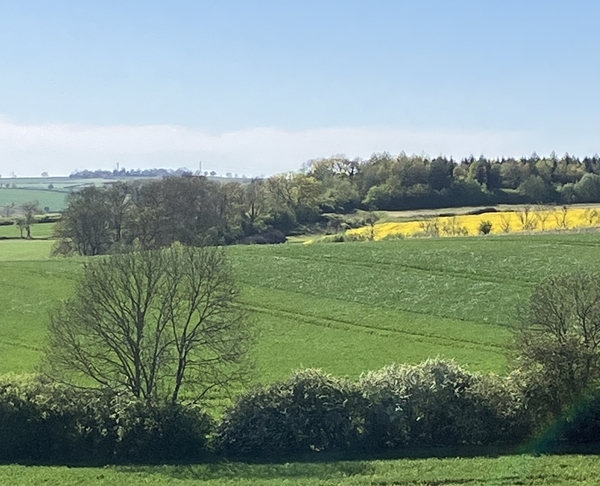 Hybrid wheat growing in Upper Pond South at Loddington.
X-Terra hybrid variety is both taller and darker green compared with the conventional variety in the lower half of the field.
Early observations are similarly impressive with the hybrid, which is a cross of two genetically distinct wheat lines through controlled pollination, about two weeks ahead of conventional varieties, despite being drilled on the same day. As you would imagine, the seed rate was lower for the hybrid variety, by 15% compared with conventional, but by growth stage 39 the number of ears per square metre are matched. The other good news is that the rooting is deeper and more extensive, so if moisture becomes an issue again then the hybrid should hang in there for a bit longer. Hopefully we don’t have to worry about that again and we can all look forward to a good harvest in 2026.