By Henrietta Appleton, Policy Officer (England)
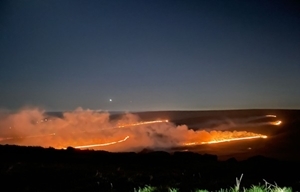 This time last year we wrote a blog reviewing the recommendations from Natural England’s commissioned review of three wildfires on its own reserves (NECR484).
In this blog we applauded NE’s creation of firebreaks on Hatfield Moss, a raised bog in the Humberhead Peatlands NNR, as mitigation against identified wildfire risk. It is therefore welcomed that the latest blog by Natural England on reducing wildfire risk references this in the section on the work they are doing on their reserves. They refer to fire reduction measures (“reducing the fuel available to a fire”) such as firebreaks and their maintenance, particularly in isolated parts of their estate.
These actions were core recommendations from NECR484. Such measures complement the warden presence to prevent the ignition source but also highlight the oft-ignored relationship between the cause of the wildfire (disposable BBQs, discarded cigarettes, etc) and the severity of it (in terms of the intensity of the fire, level of damage, area impacted, length of time the wildfire lasts etc). As our recent blog emphasised, it is the fuel load (the amount of vegetation) that converts a flame into a wildfire.
We also welcome the reference to the need for greater coordination across government and the establishment of the new Wildfire Project Group. Of note is that this group will consider the role of short-term wildfire mitigation measures alongside the overall aim of ecosystem recovery. NE has acknowledged “We must mind the gap” (Oral evidence - 23 Jun 2026) but not followed up with what that looks like. We are delighted that there is an opportunity to consider this given that re-wetting peatlands can take 50-100 years and rainfall scenarios beyond 2061 are unlikely to support re-wetting of large areas of England’s peatland. In addition, our warmer winter weather is supporting increased vegetation growth providing fine fuel for more intense wildfires.
Finally, it is notable that many of the services provided by gamekeepers in the uplands are valued by NE in this blog – working alongside the Fire & Rescue Services (FRS), operating WhatsApp groups to coordinate action and advise emergency services of access routes and site hazards, patrolling the moorland to rapidly report incidents, and indeed often to extinguish them without the need for the FRS e.g. Peak District Moorland Group.
But there is one element missing that we would like to see and that is the transfer of NE’s actions arising from the lessons it has learnt on its own reserves into its statutory duty to enable the proper protection of other important habitats. In particular, a fresh approach is needed to its role in the heather and grass burning licensing process. We hope that this is something that the Wildfire Project Group will address – and soon.