By Jayna Connelly, Science Communicator
Wasps are widely disliked. Renowned as unforgiving and unnecessary, delivering stings which they have the cheek to survive, unlike our beloved bees, often doomed to a single, fatal defence.
But what if these wasps were just as much a farmer’s ally as pollinating bees?
Our food systems are a constant balancing act with the forces of nature: unpredictable weather, limited space, and pest pressure to name a few. The latter is where our unlikely wasp allies step in.
The hunters in plain sight
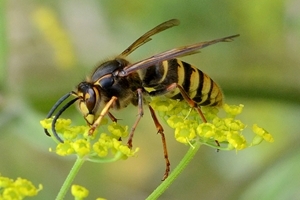 Eurasian wasps, the bold yellow and black social wasps most people recognise, are often defined by their sting. Yet their true ecological importance lies in their role as predators.
Worker wasps spend much of their lives foraging not for themselves, but for their developing brood, harvesting soft-bodied insects such as aphids, caterpillars, and flies. These are processed into protein-rich meals, fuelling the growth of their young and subsequent colony. At peak season, a single colony can remove thousands of pest insects, functioning as a remarkably effective, chemical-free form of biological control.
They are also embedded within wider food webs, both regulating insect populations and supporting birds and other wildlife. Their colonies rise through summer and collapse in colder autumn months, creating natural pulses of predation that mirror the rhythms of the ecosystem. With milder winters this be and flow risks being thrown off balance but these wasps are far from being random aggressors, they are finely tuned components of ecological balance.
A hidden majority: the parasitic wasps
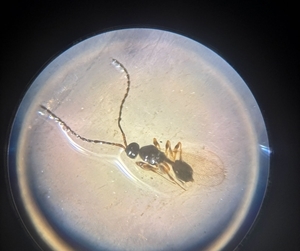 Beyond these more visible hunters lies a far larger, and far stranger, group: the parasitic wasps. Globally, tens of thousands of species are described, with many more still unknown. Even within the UK, several thousand species quietly inhabit hedgerows, soils, and crops.
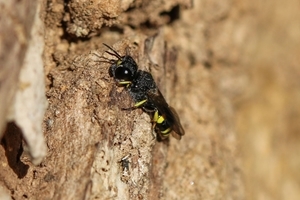
Larger, arguably more charismatic parasitica are mostly a group called Ichneumonidae while some of our smallest and tiny black Braconidae. Between them are those pictured here including Chalcid wasps (Chalcidoidea), the delicate Diapriinae with their beaded antennae, and the Aphidiinae - specialists in parasitising aphids. There is still so much to learn about these cryptic little wasps, many of which you might mistake for a fly or “midge”. Many are small, black, and look more like flying ants than our familiar Eurasian wasp.
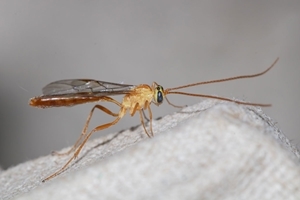
Rather than hunting prey outright, these wasps turn living insects into nurseries. A female locates her host, often guided by chemical signals released by damaged plants. Once they find a host they lay eggs on or inside it. Often they have long ovipositors, potentially mistaken for a stinger, which they use to reach their host and inject the egg inside them. The developing larvae feed internally, carefully consuming non-essential tissues first to keep the host alive as long as possible.
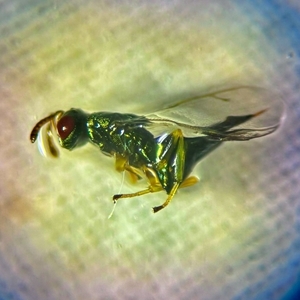 In aphids, this process produces empty shells of the host body known as “mummies”. You can spot them clinging to stems, hollowed husks from which a new wasp eventually emerges. It is a brutal system, but a crucial one – helping keeping the balance of invertebrate species.
Parasitic wasps are among the most powerful natural regulators of pest populations on Earth. Many are highly specialised, targeting only one or a narrow range of host species, making them precise biological control agents.
While social wasps suppress pests through sheer volume of predation, parasitoids apply constant, invisible pressure from within pest populations, preventing outbreaks from spiralling out of control. Chalcids alone parasitise a vast diversity of insects, from crop-damaging beetles to moth larvae, quietly underpinning ecosystem stability.
What the Science Shows: GWCT Research
 Research from the GWCT brings these hidden interactions into focus within real farming systems.
Rather than studying insects in isolation, the GWCT has examined how parasitic wasps function as part of a broader community of “natural enemies” controlling pests like aphids. Their work on integrated pest management shows that these insects can be actively supported through habitat design, flower-rich margins, field edges, and reduced disturbance all of which provide resources and refuge throughout their life cycles.
GWCT field-scale research shows that different groups of natural enemies contribute in different ways: flying predators alone can reduce aphid populations by up to 90-93%, far outperforming ground predators acting in isolation. Parasitoid wasps operate alongside these predators, contributing a complementary layer of control.
My experience in the field has shown me that often the air-borne predators are among the first to reinhabit crop fields after disturbance from agrichemicals, meaning they are first on the scene to provide natural pest control. The implication is clear: pest control is not just about intervention, it can be about amplifying existing ecological processes.
Striking the balance
 Sustainable farming is increasingly defined not by the elimination of pests, but by maintaining ecological balance. Modern agronomy accepts that low-level pest presence is both inevitable and essential, with thresholds such as 10-20% aphid infestation allowing natural enemies to regulate populations before intervention is needed. Crucially, removing pests entirely would undermine this system, predators and parasitoids collapse without a food source, weakening natural resilience. Instead, a diverse community of beneficial species keeps pests below damaging levels, reducing the need for chemical inputs while safeguarding yields, which can otherwise decline sharply, by up to 40% in severe outbreaks.
Parasitic wasps continue to appear consistently in summer insect samples, contributing not only to pest regulation but to wider food webs, including those supporting farmland birds during critical breeding periods. Their presence, alongside other natural enemies, provides a powerful indicator of how well a crop system is functioning. The latest updates from our corn bunting project reflect the importance of having balance, diversity and abundance of insects throughout crop fields, beyond pest regulation, insects are crucial food items for growing farmland bird chicks.
Rethinking the wasp
Wasps may never win a popularity contest. But viewed through an ecological lens, they are far from senseless.
From the predatory efficiency of social wasps to the surgical precision of parasitoids, they form part of a complex, multi-layered defence system embedded within our crops. They regulate pests, support food webs, and help maintain the delicate balance upon which both biodiversity and food production depend.
Photo credit: Juliet Turner