Last week the long-awaited Farming Profitability Review was published. Written by Baroness Minette Batters, the six-month review sets out 57 recommendations for both government and industry to improve the viability of farm businesses and make them more resilient.
Nick von Westenholz, GWCT chief executive, said: “We very much welcome the publication of this important review led by Baroness Minette Batters.
“Farming, environmental delivery and nature recovery are intrinsically linked. With nearly three-quarters of the UK land mass used for agriculture, it is crucial that farmers integrate measures that will help the country meet its environmental ambitions with profitable businesses that earn them their livelihood. The GWCT’s own experience with our farm at the Allerton Project in Loddington bears this challenge out – producing food alongside nature recovery is proving ever more difficult. Instead, like so many farms, we find non-farming income is proving vital to keeping the show on the road and producing food. Baroness Batters’ report could not be more timely, recognising that farming is the backbone of our rural communities and fundamental to national food security.
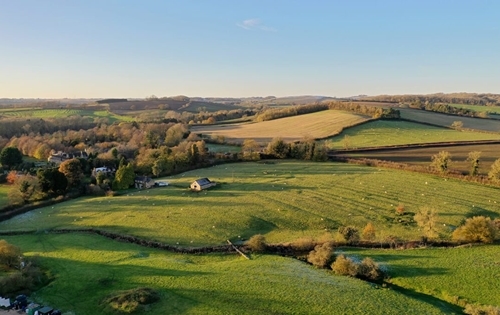
“We particularly commend the Review's emphasis on farmer collaboration as a cornerstone of future profitability. The report's vision for establishing regional Agri-Growth Hubs as collaborative farmer networks alongside the expansion of Farm Environmental Delivery Groups (FED Groups) across England's 93 river catchments, could be transformative.
“GWCT has pioneered these farmer-led, voluntary groups, from farmer clusters to larger market-focused groups such as the Environmental Farmers Group. They demonstrate how collaboration at landscape scale can deliver both environmental outcomes and economic benefits. As the Review notes, collaboration enables farmers to share costs, access funding streams not readily available to individuals, and create coordinated nature recovery whilst maintaining control of their own farms.
“The Review also rightly focuses on the importance of developing environmental markets and natural capital. The recommendation to mandate the Taskforce on Nature-related Financial Disclosures (TNFD) would create a functioning, accessible natural capital market, with private sector green financing complementing, and increasingly replacing, public funding. The review is admirably clear on the role of government in ensuring the private sector takes responsibility for offsetting the impacts of economic activity on nature and wildlife; this should give ministers serious pause for thought in light of reports that private sector requirements around biodiversity net gain and nutrient neutrality are to be weakened. Doing so would surely have disastrous consequences for nature restoration.
“It is imperative that these priorities are adopted by government as a matter of urgency. We look forward to working with policymakers, industry partners and others to implement the review’s recommendations and build the thriving, profitable and sustainable farming sector our nation needs.”
NOTES TO EDITORS
The Farming Profitability Review
The review by Baroness Batters, who also serves as a GWCT trustee, can be found on the DEFRA website.
What is a Farmer Cluster?
GWCT recognises that the UK will not meet environmental challenges such as river pollution and species recovery without a collaborative relationship with and between farmers, who manage 72% of the land. This is why the trust developed the Farmer Cluster concept in 2012, facilitating groups of contiguous landholders to work together to save threatened species in their local area. In 2022 the Trust supported the launch of the farmer-led cooperative Environmental Farmers Group (EFG), which acts as an umbrella group for Farmer Clusters and individual farms looking to access funding for habitat improvement and emissions reduction projects.
What is the Environmental Farmers Group (EFG)?
The EFG is a group of accredited, progressive farmers ready to trade through a single hub. This makes it easier for both the farmer and the business seeking the trade. EFG acts as a trusted navigator for its farmer members and by joining, farmers have access to a large amount of information and expertise on the natural capital sector. We work closely both with Government and key stakeholders within the Green Finance Industry and all trades are highly assured through long-term scientific monitoring undertaken by NCA. The farmers retain decision-making control, and each individual decides how much or how little they contribute to the whole. We believe, by working collaboratively, farmers can deliver ambitious environmental outcomes and should earn a fair reward for doing this.
The Game & Wildlife Conservation Trust
Providing research-led conservation for a thriving countryside. The GWCT is an independent wildlife conservation charity which has carried out scientific research into Britain’s game and wildlife since the 1930s. We advise farmers and landowners on improving wildlife habitats. We employ more than 60 post-doctoral scientists and other research staff with expertise in areas such as birds, insects, mammals, farming, fish and statistics. We undertake our own research as well as projects funded by contract and grant-aid from Government and private bodies. The Trust also has a dedicated professional advisory service to make sure that the results of its research are easily available to farmers, landowners, gamekeepers, and others delivering practical conservation.