 Tests have been carried out to establish the levels of methane being emitted by sheep living off a natural forage diet in the Yorkshire Dales National Park.
The Forage for CH4nge project – funded by Innovate UK – is bringing together farmers and scientists to better understand how traditional breeds and different pastures can help reduce the environmental impact of sheep farming.
Led by local Wensleydale farmer Adrian Thornton-Berry, in collaboration with the Game & Wildlife Conservation Trust (GWCT), UK Agri-Tech Centre, Scotland’s Rural College (SRUC), the National Sheep Association (NSA), and the Yorkshire Agricultural Society, it is exploring how methane emissions differ between native Swaledale sheep and half-bred Texel-cross sheep when both types graze on different forages in the upland landscape.
The study used 120 sheep – 60 of each breed – split into three groups of 40 – grazed on either improved (treated, seeded and/or fertilised), species rich (natural and untreated for 30 years) or regenerating moorland forage.
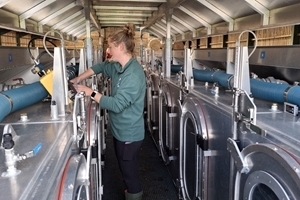
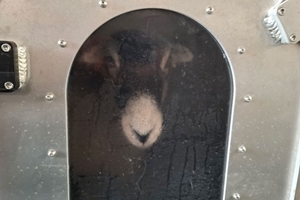
They were brought in twice, two weeks apart, and methane emissions for individual sheep measured inside mobile Portable Accumulation Chambers (PAC) on Adrian’s farm in Swinithwaite. Each sheep was placed in one of 12 pods onboard the PAC trailer for 50 minutes while being carefully monitored, and its methane emission measured. Other measurements such as weight and body condition score were collected before testing, and stock handling kept stress levels to a minimum. After testing the sheep returned to their fields to graze.
Full results of the PAC tests, and vegetation surveys carried out in June, are expected in early 2026.
Ellie Raynor, GWCT Ecologist and working on the project, says: “The ultimate aim is to find a way to support upland farmers and help them improve productivity and financial resilience at the same time.
“By using breeds that are adapted to the local landscape, and exploiting the most appropriate grazing resources, farmers can both reduce input costs and increase profitability, while making a positive environmental impact through minimising methane emissions and helping to improve biodiversity.”
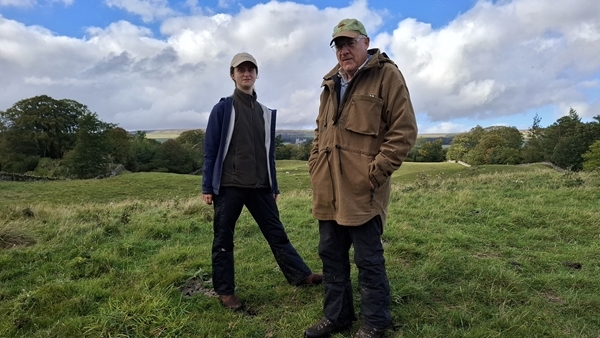 GWCT researcher Ellie Raynor and farmer Adrian Thornton-Berry
Farmer Adrian Thornton-Berry says: “The heritage aspects and cultural value of these Swaledale sheep is expected to be important, and if we can show that the native sheep are better on a certain native forage, that will help us farm these sensitive areas better in the future.
“Essentially, Forage for CH4nge is all about working with farmers to build a sustainable future for Britain's uplands, where we farm in a way that is more sustainable, profitable and better for both the habitat and climate change.”
Supporting net zero
Agriculture contributes 12% of the UK’s greenhouse gas (GHG) emissions, with 50% of this from livestock. Methane is a potent GHG, therefore a key priority for the sector to focus mitigations on.
Michael Priestley, Policy Manager for the National Sheep Association (NSA) says: “Just as in any industry, you need data. The agricultural sector has committed to trying to reach net zero by 2040, so reducing methane from our sheep and cattle will be a part of achieving that.
“While many in the industry feel that farming, and livestock farming in particular, is unfairly treated by carbon emissions methodologies, putting sheep under this kind of scrutiny will yield important information to inform breeding and management decisions. We know from genetic work that methane and climate efficient indices are close to profitability indices, so by selecting a low-methane, carbon efficient ewe, we should be able breed more profitable and sustainable sheep.
“Methane is not as long-lived as either carbon dioxide or nitrous oxide and so needs to be treated separately when assessing environmental impact. More significantly, where use of fossil carbon releases carbon held out of the atmosphere for millions of years, the natural carbon cycle associated with forage growth and ruminant digestion is only 10-12 years, so carbon emitted as methane is recaptured by plant growth relatively quickly.
“However, sheep farming recognises its role in climate change abatement and as well as genetics and rumen microbiology, the industry is working on nutrition, nutrient management, flock health and efficiency, and fossil fuel dependency to minimise emissions from sheep flocks while continuing to produce highly nutritious food to enhance food security.”
Forage for CH4nge aims to help define mitigation strategies for upland sheep farmers that increase efficiency and reduce methane emissions.
The development of a method for comparing emissions from sheep breeds grazing in various natural habitats, will also help provide a new framework to measure carbon footprint and help define sustainable and resilient future farm systems.
The study secured funding from the Department for Environmental Food and Rural Affairs (Defra) and UKRI as part of the Research Starter Programme.
Notes to editors
The Game & Wildlife Conservation Trust – providing research-led conservation for a thriving countryside. The GWCT is an independent wildlife conservation charity which has carried out scientific research into Britain’s game and wildlife since the 1930s. We advise farmers and landowners on improving wildlife habitats. We employ more than 60 post-doctoral scientists and other research staff with expertise in areas such as birds, insects, mammals, farming, fish and statistics. We undertake our own research as well as projects funded by contract and grant-aid from Government and private bodies. The Trust also has a dedicated professional advisory service to make sure that the results of its research are easily available to farmers, landowners, gamekeepers, and others delivering practical conservation.
For information, contact:
Eleanor Williams
Telephone: 07592 025476
Email: ewilliams@gwct.org.uk