Black grouse translocated to the North York Moors in a bid to expand the range of one of the UK’s rarest birds have successfully bred and fledged a total of 12 chicks in their first breeding season.
It is likely the first time in nearly 200 years black grouse have bred in the area. Occasional females have been spotted on the North York Moors in recent years, but before this summer, there are no reliable records of successful breeding since the 1840s.
The Black Grouse Range Expansion Project, funded by Natural England’s Species Recovery Programme and led by the GWCT, saw 20 birds - 10 males and 10 females - moved from their stronghold in the North Pennines to the North York Moors last autumn.They were caught by researchers at night-time roosts and immediately transported to the release site two hours’ drive away.
Eight males and eight females were fitted with radio tags and followed through the breeding season to assess movements, survival and breeding behaviour.
The seven males still present in the spring established leks in and around the area where they had been released, where they displayed to attract females and encourage them to mate.
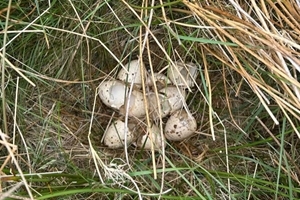 All of the seven females still around in the spring nested, with five nests hatching and two being abandoned. Four of the five females that hatched chicks fledged broods of one, two, four and five chicks.
Dr Phil Warren, from GWCT and leading the project, says: “We are really pleased with the results from the first year of the project. The birds have settled well, established leks and, most importantly, bred successfully.
“The next phase is to bolster the initial release with further birds this coming autumn to help establish a self-sustaining population in the North York Moors.
“This project has only been possible with the help of kind donor estates in the North Pennines helping locate and move birds. We are also incredibly grateful for all the help we have had from the keepers on the North York Moors, who have provided suitable habitats and provided protection from predators throughout.”
Further translocations
To further increase the population in the North York Moors, we plan to move another 20 birds this coming autumn. It will again take place under a licence from Natural England, and the birds will be moved using the same technique.
Jimmy Brough is headkeeper on the Rosedale and Westerdale estate, where the birds were released. He says the success of the project is down to land managers across several estates working together.
He says: “It’s amazing to have black grouse breeding in the North York Moors for the first time in living memory and we are particularly proud that they have done so well after being released here, but it’s not just the team on the estate who’ve made this possible.
“Black grouse need landscape-scale habitat management to thrive and we are surrounded by other moors where the gamekeepers carry out conservation work year-round that benefits not just black grouse, but a wide range of other red-listed species.
“Targeted management of predators, both on the moors and the in-bye farmland where black grouse breed, is essential, as is vegetation management, which encourages growth of heather, cotton grass and bilberry, which are all important food sources. This work is privately funded by grouse moor managers and benefits the public who come to see the wonderful wildlife of the moors.”
Though black grouse are on the quarry list, gamekeepers and shoot owners across the UK have for many years observed a voluntary moratorium on shooting them in light of their conservation status.
One of our rarest birds
Black grouse are a Red List species of high conservation concern. Once present in every county in England, they are now largely restricted to the North Pennines, which includes parts of County Durham, Northumberland, Cumbria and North Yorkshire. Here, numbers remain broadly stable, fluctuating between 1,000-2,000 displaying males over the last 25 years. Today, 96% of remaining black grouse are found on the edges of moorland manged for red grouse.
The North York Moors were selected following landscape-scale habitat improvements on the fringes of moorland managed for grouse shooting. Work carried out included removing conifer woodland and restoring the ground to bog, heath and scrub woodland. Moorland grasslands have also been managed more extensively to control bracken and restore bilberry and heather.
Researchers hope that the climate in the North York Moors, which is drier and warmer than that in the Pennines in June when chicks hatch, will help the birds to continue to breed successfully and re-establish populations in an area that is more resilient to the effects of a changing climate.
Natural re-colonisation of black grouse to the North York Moors from the existing populations in the North Pennines is currently limited by the 30km gap across unsuitable lowland farmland habitats in the Vale of Mowbray.
The Black Grouse Range Expansion Project is led by researchers from the GWCT’s Uplands team and funded by £164,000 from Natural England’s Species Recovery Programme, £30,000 from the BASC Wildlife Fund and generous donations from members and the public through the Black Grouse Appeal.
Notes to editors
The Game & Wildlife Conservation Trust – providing research-led conservation for a thriving countryside. The GWCT is an independent wildlife conservation charity which has carried out scientific research into Britain’s game and wildlife since the 1930s. We advise farmers and landowners on improving wildlife habitats. We employ more than 60 post-doctoral scientists and other research staff with expertise in areas such as birds, insects, mammals, farming, fish and statistics. We undertake our own research as well as projects funded by contract and grant-aid from Government and private bodies. The Trust also has a dedicated professional advisory service to make sure that the results of its research are easily available to farmers, landowners, gamekeepers, and others delivering practical conservation.
For information, contact:
Eleanor Williams
Telephone: 07592 025476
Email: ewilliams@gwct.org.uk