The 2025 winners of the prestigious Purdey Awards for Game and Conservation were crowned at a ceremony in London on 10 February. The Gold award went to East Carnigill Estate in Country Durham, which has been instrumental to the GWCT’s Black Grouse Project.
Presenting the award to owner Viscount Matt Ridley and his team, chairman of the judging panel, His Grace, The Duke of Wellington, said the estate showcased how conversation and shooting can – and should – be thoughtfully intertwined.
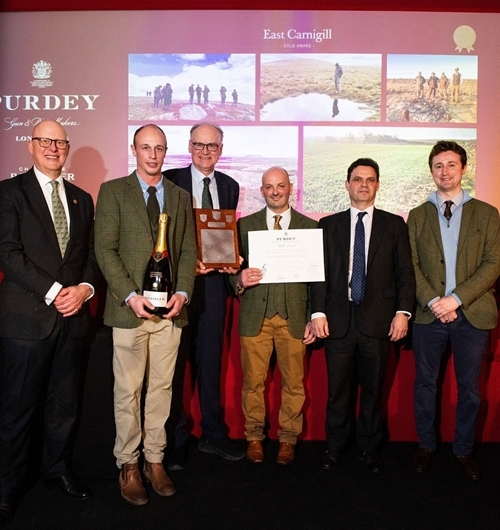
Described by the judges as “a five-star haven for wildlife and sport” whose profound dedication was a beacon for British wildlife and countryside conservation. The estate has focussed much of its efforts on regenerating the moor edge for the benefit of waders, grey partridges and black grouse. That work has seen a dramatic increase in the numbers of lekking black grouse males.
It has been thanks to this increase, helping to keep black grouse populations stable and produce a surplus, that the GWCT’s uplands research team was able to translocate both cocks and hens from the leks at East Carnigill to the North York Moors where they have now successfully bred for the first time in nearly 200 years and are re-establishing a population.
The estate’s education programme 'Let's learn Moor ' was also praised and described as instrumental in the success of grouse moor management in Westminster debates, and that ultimately convinced the judges.
Viscount Ridley said: “I’m very grateful to Purdey on this fabulous occasion, and for their generosity and imagination in supporting this cause. The judges were rigorous and thorough, and they asked a lot of questions, and it was very enjoyable dealing with them. But my biggest thanks go to our gamekeepers who are also conservationists and just as keen as I am to see the black grouse flourish.”
Nick von Westenholz, GWCT CEO and presenting the awards, said: “Doing the research and the science is great, but it needs to have a real world positive consequence and that would not be possible if we did not have practitioners on the ground, the land owners, the gamekeepers, shoot managers, farmers who are actually doing the hard yards. That is exactly what these award recognise.”
This year’s entrants represented a variety of shoots around the UK, each demonstrating their own particular conservation efforts. All shortlisted entrants underwent significant preliminary assessment by Dr Mike Swan of the GWCT Advisory Service, followed by in person visits from members of the judging panel, who then met to discuss the merits of each and decide on the winners.
The Silver Award was given to Park Farm Shoot in Norfolk, a commercial arable farm where, according to our judges, shoot days are ‘run like a military operation’. Farming practices here ensure that sustainability, habitat biodiversity and protecting the wild fenland strain is at the forefront of their operations, while innovative ways of connecting with the local community helped to impress the judges.
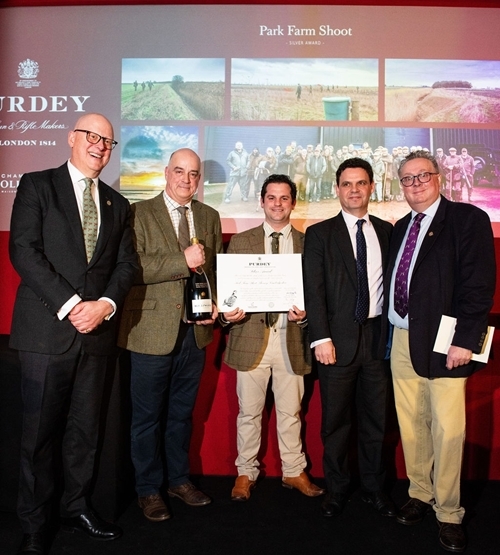
Micheal Sly MBE, owner of Park Farm, said: “Not all heroes wear capes, so it’s really important to recognise a lot of the unseen work and dedication that goes on around the country, helping to manage the environment we have and the wildlife that goes with it. It is a great honour and privilege to even be nominated, so to get a podium finish is incredibly special.”
The Bronze Award was awarded to Kingston Wood in Cambridgeshire for the dramatic habitat enhancements seen over the past seven years – including the notable addition of a series of new flighting ponds. The team believes in low stocking and shoots eight days throughout the season, yet the judges concluded that everything they do is tied to the shoot.
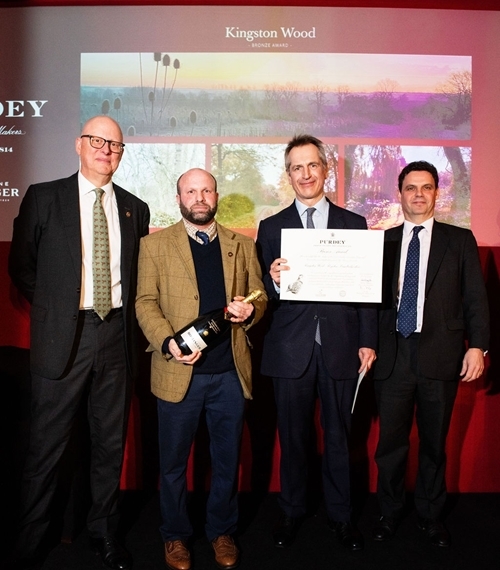
Julian Metherell, owner of Kingston Wood, said: “It’s been really exciting to hear about the projects of the other nominees, and we feel very humbled to have been a winner. We hide our lights under a bushel. Too rarely we celebrate the extraordinary work that the men and women on our shoots do 365 days a year to support the most wonderful biodiversity and habitat creation – which does so much good for the countryside beyond shooting.”
In addition to the Gold, Silver and Bronze prizes, this year the judges felt that Necton Farm in Norfolk should be Highly Commended, based on the owner’s singular approach to regenerative farming, as well as winning this year’s Norfolk Partridge Award.
Edward Spratt, owner of Necton Farm, said: “The reason I wanted to do the Purdey awards is because it involves conservation and shooting, not just one or the other. The awards give us something to aim for and other people something to learn from.”