Key points
- Medicated grit was created in the 1980s to reduce the impact of Trichostrongylus tenuis on red grouse.
- GWCT Scotland reviewed the evidence for BASC on the ecological impacts of medicated grit in upland habitats.
- Most studies found little or no toxicity on land, but aquatic environments, especially fish and invertebrates, showed clearer risks.
- Best practice: keep medicated grit away from water and secure grit trays to minimise spills.
- Future research should focus on monitoring flubendazole and its metabolites in upland waters, and measuring their concentrations in grouse faeces.
Background
 Red grouse are an endemic species to the United Kingdom, important not only culturally and economically but also ecologically via the management of their habitat and the benefits this management has on wider biodiversity. Many scientific studies have shown that the related management of habitat, predator and disease aimed to maintain red grouse populations simultaneously supports unique, rare and in some cases internationally important plant and animal communities.
Red grouse populations show multi-year fluctuations, partly due to infection with a parasite called Trichostrongylus tenuis. Early work by Hudson (1986) demonstrated the parasite’s role, prompting trials of fenbendazole-coated grit in the late 1980s. Fenbendazole (Panacur) is a worm-control medication (benzimidazole) widely used in livestock and pets.
In 2007, medicated grit was reformulated to use flubendazole (Flubenvet), another worm-control medication with similar action but more widely licensed for gamebirds. The fat used to bind the drug onto the grit was replaced with a more heat-stable substance, so the medicated coating does not melt, soften or break down as easily in warm weather. Because the new formulation persisted longer in the environment, a 28-day withdrawal period was introduced under the Veterinary Medicines Regulations.
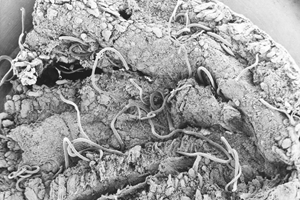 Medicated grit use has become widespread across grouse moors. Higher grouse densities supported by worm control may have contributed to other density-related diseases, such as respiratory cryptosporidiosis. There are concerns about resistance against the medication developing in T. tenuis, mirroring resistance already seen in the parasites of large livestock. Resistance has not yet been detected in grouse populations, but the risk is recognised.
The Werritty Review (2019) raised concerns about environmental contamination from flubendazole, such as run-off into surrounding habitat. Significant knowledge gaps remain regarding environmental persistence of flubendazole, impacts on non-target species and wider biodiversity effects on long-term medicated grit use.
Given the scale of use, potential ecological impacts and regulatory interest, a review of the biodiversity impacts of medicated grit is timely.
What they did
GWCT Scotland secured a tender from BASC to review the scientific evidence base for the research question: What are the ecological impacts of medicated grit in the uplands? The team introduced a Rapid Evidence Assessment (REA). This is a more efficient review framework compared to a traditional literature review, based on clear criteria for the search strategy and minimising bias.
The initial search aimed to capture only studies relevant to the use of medicated grit as part of grouse-moor management in UK uplands. This search returned no relevant results, so the team broadened it to the environmental impacts of fenbendazole and flubendazole in general, in the hope that effects observed elsewhere might be applicable to UK uplands as well.
Key criteria included:
- Only original research was included.
- The study had to look at unintended effects on non-target species.
- The study had to measure an actual impact on wildlife.
The quality assessment was streamlined to keep the review fast, consistent and objective. After deciding that detailed questionnaires were too time‑consuming, the team, following discussion with BASC, used short yes/no checklists tailored to the real-world and modelling studies. Each study could score up to five points based on basic features of good design, shown as asterisks in the citations, and any uncertainties were resolved through independent review.
Overall, 24 studies met the criteria and one additional relevant study was identified for a total of 25 studies. Of these, two were considered high-quality, 11 were moderate and 12 were deemed low quality. The research was geographically diverse, spanning four continents with only 12% from the UK. Most were published in the last 20 years, reflecting the growing use of the worming drugs.
13 studies looked at fenbendazole alone, nine looked at both drugs, and only three focused solely on fluebendazole. This means the evidence specific to the current medicated grit compound is limited.
What they found
Overall, studies reported no or little toxic effect of the two medications on terrestrial environments. However, toxic effects were reported for aquatic environments, especially fish and invertebrates. Reducing the risk of contaminating water features needs to be a key objective of sustainable grouse moor management.
Terrestrial studies
Terrestrial risks generally appeared low to moderate, with some uncertainty around soil processes and metabolite behaviour. Three studies found no adverse effects on survival, growth or reproduction of earthworm species, though one study reported 55% mortality under lab conditions at high exposure. Broadly, no toxic effects were found for dung beetles and flies at realistic exposure levels. One study did find reduced dung decomposition by soil microbes, possibly due to effects on detritivores or fungi. Several studies did show that plants can take up and metabolise flubendazole/fenbendazole, often converting them into less active forms, however some metabolites remained biologically active.
Aquatic ecosystems
Both drugs bound strongly to organic matter and sewage sludge. They are likely to be removed by wastewater treatment, but if they reach natural water bodies, they can be harmful.
Several aquatic studies were based on zebrafish, a species widely used in experimental research. These showed that aquatic ecosystems showed the greatest vulnerability. Risk assessments indicated medium to high risk for fish in contaminated waters. Fenbendazole and flubendazole was shown to cause developmental abnormalities, reduced survival and heart defects and deformities in zebrafish. One study found high risk to frogs and toads from fenbendazole in river water and wastewater. Strong negative effects were also shown by multiple studies on water fleas, flatworms, annelids, midges and amphipods. These are often the most sensitive taxa, with toxicity at low concentrations. Some evidence of altered microbial activity but mostly the effects were low/mixed.
What this means
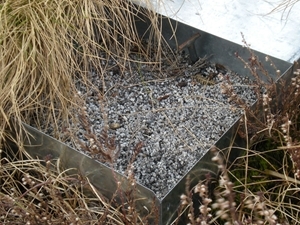
 It is clear from this review that relevant and applicable information is limited. Importantly, best-practice guidance includes key points such as distributing the grit in trays rather than scattering on the floor. This method will help minimise the medication entering the water table on the moors. In this way, best practice can reduce the issues raised by the literature that highlights the vulnerability of aquatic systems.
This review concluded that current guidance for medicated grit placement and management (e.g. siting away from water, using trays, adhering to withdrawal periods) is likely to be sufficient to minimise environmental risk, provided it is consistently implemented. To assist land managers in following this guidance, the GWCT Scotland team is offering grit assessments – on-site visits where the advisory team can help managers optimise their practices for the good of the red grouse and the environment.
This review also highlights major evidence gaps specific to UK grouse moors. No studies have measured actual concentrations of flubendazole or metabolites in streams draining grouse moors comparable to field conditions. It is also unknown how much active ingredient or metabolites are excreted by grouse, in what form, and over what timeframe. Plant uptake and metabolite formation have only been studied in non‑upland species. These gaps prevent a full environmental risk assessment for UK uplands.
Key recommendations for grouse-moor management include:
- Prioritise avoiding contamination of water features.
- Use grit trays secured to the ground to reduce spillage.
- Place grit trays well away from watercourses.
- Adhere to the 28‑day withdrawal period.
- Avoid over‑prescription and unnecessary prophylactic use.
Future research should prioritise field monitoring of flubendazole and metabolites in upland water bodies and laboratory quantification of flubendazole/metabolite concentrations in grouse faeces. More plant metabolism studies would also be useful, focusing on key moorland species such as heather and cotton grass.
Read the full review
Meister, F. J., Williamson, L., and Hesford, N. (2025) The Environmental Impact of Medicated Grit.