By Alex Keeble, Game & Wildlife Advisor
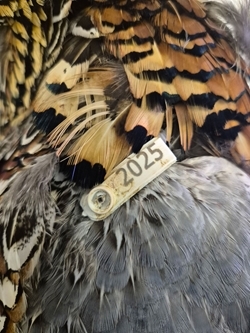 Radio-tagging and wing-tagging birds has been carried out by the GWCT for research purposes for many years. During the 60s and 70s, a National Game-Marking Scheme was set up by the GWCT to gain an understanding on how the release dates and ages of pheasants effected the overall percentage return. This work helped shape how we release pheasants in the UK today. Another pioneering project the GWCT started involved tracking woodcock migration paths using satellite tagging technology to identify the threats and risks to woodcock from climate change, deforestation, marsh drainage and intensive farming across Europe.
Starting in 2013, the University of Exeter and the Game & Wildlife Conservation Trust began working on the Enhanced Pheasant Project, which aimed to improve pheasant survival in the most cost-effective way using a method that changed current pheasant management practices as little as possible, and adopted a system that could be easily adapted to current pheasant breeding systems. This was achieved by the provision of perching material and providing an improved diet during the rearing process that resulted in improved pheasant survival post-release. The birds were wing-tagged after the rearing system and the results showed that enhanced pheasants were harvested at rates 16-17% higher than control pheasants on shoots releasing fewer than 601 or more than 2,000 pheasants but 6% lower on shoots releasing 601-2,000 pheasants.
Whilst attending university I was involved in a GWCT study radio-tagging released red-legged partridge poults on a shoot in Suffolk. The aim was to understand the partridges’ dispersal, habitat preferences and fate. Remarkably, on my site the birds rarely dispersed far from the release point, preferring to stay within the maize game cover habitat, but what was significant was the high mortality caused by foxes.
More recently we have been using radio transmitters for the Black Grouse Range Expansion Project, which is funded by Natural England’s Species Recovery Programme Capital Grant Scheme. The project’s aim is to translocate black grouse from the North Pennines to suitable estates in the North York Moors, which according to historic records have not been recorded breeding there since the mid-1800s.
For the last few years we have been wing-tagging released pheasants at the GWCT Loddington Shoot based at the Allerton Project. We release 2,600 pheasant poults of which half are wing-tagged at the catching stage of release, using dated and colour-coded Plastag B wing-tags from Roxan International. This study is based on our previous collaborative work with the Enhanced Bird Project and aims to understand whether providing perches within pheasant rearing pens enhances the likelihood that the pheasants will roost earlier after release and therefore have a better survival rate than birds reared with no perches. It is common practice for most game farms to provide perches within rearing pens of fir boughs and branches to allow extra perching space and enrichment for the poults at the early stages, but does it make a significant difference to percentage returns?
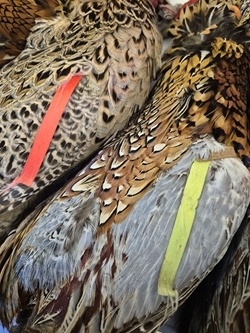 Although the main aims are to understand survival rates, we can additionally monitor the birds’ dispersal across the shoot along with their ages. The oldest bird we have seen on the shoot has been three years old, and although neighbouring shoots do shoot a small proportion of tagged pheasants, the numbers that wander are minor. For the first time this year, we have tried to assess the birds’ ability to roost within the first few days of acclimatising within the release pen. Due to the nature of the wing-tags being small, we positioned additional coloured ‘day-glow’ ribbons to the tags to help identify enriched and control birds whilst the birds went to roost. This is an ongoing study and as yet there are no results to show whether having perches within rearing pens significantly increases the likelihood of a greater return, but we hope to have some figures available in due course.
If anyone has any ideas on how to assess the roosting behaviour of the birds immediately after release, including assessing whether one group roost higher off the ground than the other, then we would welcome comments.
Wing-tagging pheasants can be carried out under the Mutilations (Permitted Procedures) (England) (Amendment) Regulations 2008, which states that the procedure may only be carried out on birds other than farmed birds for conservation purposes (including education and captive breeding programmes) or for research.