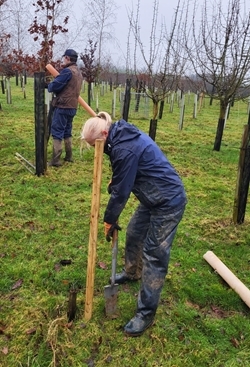
 Agroforestry is increasingly recognised as a powerful way to build resilience into modern farming systems. At its core, it is a land‑use approach that integrates trees with crops, livestock or both, blending the principles of agriculture and forestry into a single, multifunctional system. Although the idea of farming with trees is far from new – traditional landscapes across the world have long combined grazing, cropping and woodland – today’s agroforestry represents a more deliberate, designed approach. Farmers are now exploring how trees can be strategically incorporated into productive farmland to deliver environmental benefits while supporting long‑term profitability.
These systems require careful planning and investment, but the rewards, greater land‑use efficiency, improved ecological function, and more diverse revenue opportunities are increasingly evident on farms that have taken the plunge. Designing agroforestry well means thinking through both the practical and ecological dimensions of a site. It is generally encouraged to work with natural processes, build on existing land use, adapt as trees grow, and plan layouts that suit both farming operations and long‑term goals.
Because agroforestry is multifunctional by nature, predicting financial outcomes can be challenging, but recording costs and returns over time helps build a clearer picture of how trees contribute to whole‑farm profitability. The benefits go beyond financial though, and extend to a more resilient landscape claimed to improve soil health, reduce soil erosion and provide habitat for wildlife, amongst other benefits.
Ten years of Agroforestry at the Allerton Project
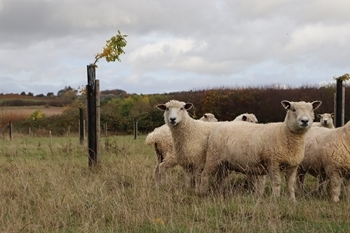 At the Allerton Project, the research team aim to measure some of these ecosystem benefits and set them into a realistic farming example. The Allerton Project’s long-term silvopasture agroforestry trial, established in 2016 in partnership with the Woodland Trust, is now reaching its ten-year milestone. This pioneering research at the Game & Wildlife Conservation Trust’s demonstration farm in Leicestershire integrates trees with sheep grazing across a range of planting densities to explore how livestock, pasture and native tree species can be managed together for multiple benefits. By monitoring ecological and production metrics, including soil carbon, infiltration, biodiversity and grass growth, the trial aims to understand the trade-offs and opportunities of combining trees with pasture, providing practical insights to support resilient, nature-rich farming systems.
Researchers at Allerton have been monitoring moth species using light traps. Working with a local moth recorder, they were able to compare the abundance and diversity of moth species found in the agroforestry system with the conventional pasture. Across six months they found that the agroforestry pasture supported more moth species and higher overall diversity than conventional pasture.
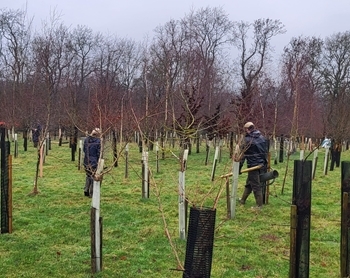 The team has also been carrying out essential maintenance across the agroforestry plots. This has included removing old tree guards that have outlived their usefulness, fitting new guards to trees that have been nibbled by wildlife, and replacing any saplings that failed or were damaged.
These activities may seem routine, but they are a crucial part of ensuring the long‑term success of any agroforestry system. Young trees are particularly vulnerable in their early years, and even once established, they can still be affected by browsing, weather damage or competition from surrounding vegetation. Replacing failed trees maintains the integrity of the design, ensuring that spacing, shelter effects, carbon benefits and future yields develop as intended. Removing old guards prevents them from restricting growth or degrading into the environment, while adding new guards protects the investment already made.
In a wider context, this kind of maintenance reflects the reality that agroforestry is not a ‘plant and walk away’ approach. It is a living system that evolves with the farm, requiring the same level of attention and adaptive management as any other part of the business. The Allerton Project’s ten‑year milestone is a reminder of the long‑term commitment involved, but also of the long‑term rewards. As the trees continue to mature, their benefits — for wildlife, soil health, carbon storage and farm resilience — will only increase. The work carried out this year ensures that the system remains on track to deliver those gains for decades to come.