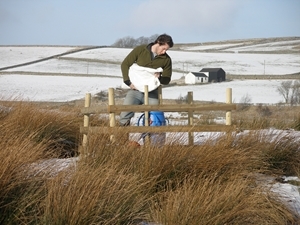
 As winter seems to be in full swing, many organisations such as the Wildlife Trusts and RSPB are encouraging us to feed the birds. They are reminding everyone to maintain consistency, while also advising on what and how to feed for the best results. This is largely targeted towards garden birds, which can be significant when our gardens make up 4.6% of the land use in the UK. However, farmland makes up a huge 72% of the land use in the UK, so it makes sense to support our farmland birds this winter too.
Do we need to feed birds over winter?
It is clear from the data that birds are in need of our help. Since 1970, combined bird species indices have declined by 18% in the UK. Farmland birds have experienced particularly concerning rates of decline, having lost around 60% in the same time period. Declines of some species such as tree sparrow are particularly severe.
With this in mind, it seems logical that feeding birds should be good news. Feeding them in our gardens has been a long-standing hobby for many. Many of us can remember putting out scraps in our gardens and feeding ducks bread as children. The latter is now largely frowned upon but in spite of this, recent advice from the RSPB suggests human foods such as potato, cooked rice and hard fat can all be put out in our gardens to support birds this winter.
Despite what we might observe birds enjoying, evidence from studies in woodland shows that providing fatty foods benefits only some species and can actually be detrimental to others. Blue tits, for example, have previously been shown to have reduced breeding productivity when fed fatty foods such as peanut cakes and vegetable fat. This contrasts with findings from a similar study showing a positive impact on breeding productivity when great spotted woodpeckers were provided with suet. The takeaway is that different species respond differently. Feeding should reflect those varied needs, but maybe we should be proceeding with caution in using ‘less natural’ food stuffs when we cannot select which species feed on them.
Arguably these studies were based in more ‘optimal’ habitat than will be the case for our gardens and arable land. Woodland likely has more caterpillars and other key food items where the balance in tit diet may be lost. In gardens, supplementary food could be providing a crucial and beneficial alternative that increases an otherwise low breeding success rate. More research is needed on this topic with a focus on survival as well as breeding success.
Farmland birds
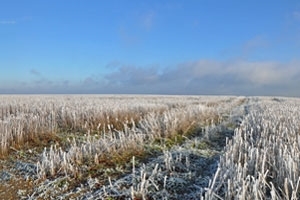 In terms of the wider countryside, pre-war farming systems were far less efficient. Harvests left a significant proportion of grain behind in the fields, which many species relied on to build fat stores before winter. Modern farming, however, leaves far less winter stubble and fewer weed seeds, meaning some species have lost much of the semi-natural food that once sustained them. On top of this, hedgerows have been lost or may be over-trimmed, limiting the berry supply that should provide additional food. Unfortunately, robust data on berry availability are sparse, and what does exist is often inconsistent or lacks standardisation.
Supplementary feeding and wild bird seed mixes have been used for decades to support healthy gamebird populations, improving body condition, densities and breeding success. GWCT research has resulted in supplementary feeding being included as an agri-environment option, with proven benefits for farmland birds that go beyond the pheasants, and can help many other species such as grey partridge, tree sparrows and yellowhammers.
A more natural form of feeding comes through cover crops and field margins planted with wild bird seed mix. These provide food, habitat and even non-seed food by harbouring insects and other invertebrates too. A study in eastern Scotland found that game cover crops supported dramatically more birds, up to 100 times more per hectare, than nearby conventional farmland such as stubbles or set-aside. These dense winter food sources attracted a far wider range of species, including several in serious decline.
The findings suggest that providing reliable food through winter, whether via game crops, wild bird seed mixes, or supplementary feeding, can make a meaningful difference to the survival of many farmland birds. Additionally, other evidence suggests that revising management guidelines to ensure stubble and sacrificial crops deliver seed into late winter could help reverse declines in species such as the reed bunting.
This cover crop/margin habitat works well in tandem with gamebird feeders when providing supplementary feed after the shooting season. Feeders should be placed within semi-natural bird seed habitats, where birds already expect to find food. Scattering a small amount of mixed seed twice a week within these wild bird seed areas once the habitat itself has stopped producing is also really helpful.
Hope from the Big Farmland Bird Count
Results from the GWCT’s Big Farmland Bird Count 2025 highlight just how valuable supplementary feeding can be on working farms. Of the farmers who took part in the count, 44% were providing supplementary feeding and 65% were involved in agri-environment schemes. 44% of the farms had a shoot and of those farms 74% had wild bird seed mix. In Northern Ireland an incredible 100% of contributing farms with a shoot were also growing wild bird seed mix.
These statistics exemplify how gamebird management can be a key a driver for farmland bird conservation. Providing good food resources is one of the three key components of the ‘three-legged stool’ of nature conservation (habitat, food and predator management). This support provided by land managers to maintain shoots has spill over benefits for the wider ecosystem and has been shown to boost wild birds and even pollinators.
Different species, different needs
As with all wildlife, diversity supports biodiversity, and this is no different for garden and farmland birds. Whether you are focusing on your garden or at a larger farm scale, offering a range of food types helps support a wider variety of species, particularly during the ‘hungry gap’ from January to April when natural food supplies are at their lowest.
Importantly, large-scale feeding experiments across English farmland show that not all species reach peak demand for supplementary food at the same time. This suggests that, while diversity of food types is important, diversity of timing is equally critical. Current agri-environment schemes often fail to provide enough seed in late winter, leaving these species vulnerable. Generalist granivores such as sparrows and pigeons tend to use feeders most heavily in January, when harsh weather bites. But specialists like yellowhammer, reed bunting, chaffinch and dunnock peak later, in February or March, when natural seed supplies in stubble fields have been exhausted.
In terms of food items, finches and buntings thrive on mixed seed and grain, while robins and wrens are insectivores. Migrant thrushes such as fieldfares and redwings feed mainly on hedgerow fruits. Garden feeders are often used by wrens and some migrant thrushes, which like soft-food sources like mealworms and suet.
In farmland, however, offering a wide variety of food can create a trade-off: different bird species pick out their preferred seeds, leaving much of the remainder scattered on the ground, where it is quickly taken by pests. To reduce this waste, most farmland feeders stick to wheat. Wheat is readily eaten by partridge, yellowhammers, chaffinches and others, and results in less food being lost. This is where semi-natural wild bird seed habitats play a vital role, providing the diversity of food required by other farmland birds without the drawbacks of mixed feeding at artificial stations.
What are the concerns around feeding birds?
 Beyond climate change and habitat loss, one of the key drivers of bird declines in recent years has been linked to diseases such as avian influenza and trichomonosis (a parasitic disease of birds). Research based on Garden Wildlife Health data strongly suggests trichomonosis is particularly responsible for the declines of greenfinch and chaffinch in the UK. This disease can be transmitted via infected saliva through contaminated food or water, making hygiene at feeders extremely important.
Another long-standing concern is the idea that feeding creates a dependency that puts bird populations at risk of collapse if people suddenly stop. In the case of released gamebirds, this is undeniably true. However, a more recent publication from Oregon State University suggests that small songbirds visiting feeders are unlikely to develop an unhealthy reliance on them.
BTO and experimental studies show that food taken from feeders typically makes up only a modest portion of a bird’s winter intake. Isotope work in the UK found individual blue tits obtained roughly 6-26% of their diet from supplied peanuts (site averages typically in the low teens). Other work from the USA has shown the physiological benefits of feeders tend to disappear within 10 months after feeders are removed, suggesting feeders act as supplementary rather than essential resources for most small songbirds. However, responses vary by species, site and winter severity, so feeding remains an important, targeted tool alongside habitat management.
While there is no evidence to suggest that garden feeders create dependency, feeding does affect the birds we see around us. A more subtle concern is that we may be artificially bolstering common, generalist species, the ones that readily use feeders, and unintentionally putting extra pressure on less common or more specialist species that rely on habitats rather than feeders. This doesn’t mean we shouldn’t feed birds such as blue tits, but it reinforces why habitat improvement and diverse food sources should sit alongside supplementary feeding.
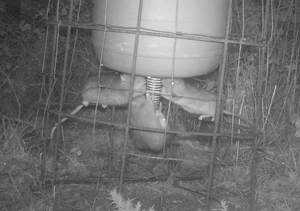
Finally, supplementary feeding has been shown to be inadvertently used by pest species. Studies show that rodents, pigeons and corvids can consume the majority of food at feeders, especially if placed in open fields. Gamebirds and songbirds do better with feeders placed along hedgerows, but even then, pests like rats take advantage. Regularly moving feeders a short distance confuses rats while maintaining availability for birds. Poorly managed feeding can be inefficient and may boost unwanted species rather than conservation-priority birds. Some people move feeders into hedges to stop pigeons accessing but this does not prevent rats, so instead GWCT advisors recommend locating them in more open places but use feeders with good design.
What farmers and you can do now
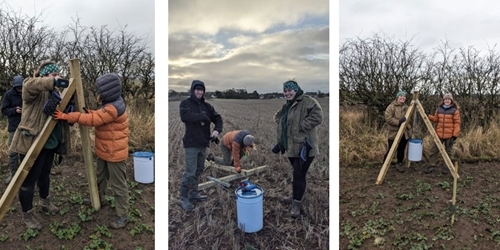
Many Farmer Clusters have integrated supplementary feeding into their management plans, often funded through Countryside Stewardship (CS) or Sustainable Farming Incentives (SFI) options. Feeding birds can be hugely beneficial, particularly in winter, but:
- Automatic feeders are another option. These have a spinner on the bottom, 50 grams of feed set to disperse twice a day (9am and 2pm) is recommended.
- Food type matters - Provide mixed seed, grain and high-energy foods at several feeding points.
- Supplementary feeding should complement, not replace, good habitat - winter stubbles, wild bird seed mixes, best practice hedgerow management, and insect-friendly margins. Whether it’s in your garden or in the wider countryside, allow hedges to fruit and flowers to set seed where possible.
- Hygiene is essential to reduce disease transmission.
- Garden feeders - Clean feeders regularly (weekly), provide fresh drinking water daily.
- Farmland feeders - Rotate feeder locations to avoid food waste build up and remove waste under feeders. Moving the feeder a few metres every time you refill it is preferable.
- Over-reliance is unlikely, but the local balance of species can change depending on what and when you provide feed. To optimise the benefits of your efforts, keep feeding through late winter and early spring, the period when demand is highest.
- Monitor bird use through simply watching your feeders, farm counts, and please take part in the GWCT’s Big Farmland Bird Count in February. Not only will this help contribute to our understanding of feeder use, but also allow you to look out for signs of ill health in the birds using the feeders.
Supplementary feeding isn’t a substitute for habitat creation, but when used alongside it, it offers a powerful boost for farmland bird recovery. The BFBC shows that farmers’ actions on the ground can collaboratively transform food resources available for farmland birds during the hungry gap and our wider scientific understanding will continue to develop and inform best practice.