Written by Jayna Connelly, Science Communicator
Where do birds live? Many still imagine robins in hedgerows or owls in hollow trunks. But waders, gamebirds, warblers, buntings, pipits, chats, larks, wagtails, nightjars, waterfowl, gulls, terns, even raptors like short‑eared owls - all of them are ground nesters.
Nearly every habitat has species that prefer the ground. And their nests? They are works of camouflage art.
Lowland Heaths and Farmland
Some of the most astonishingly curated nests are monitored by our Farmland Ecology Research Assistant Ellie Ness in her own time: “Nightjars and woodlarks tuck eggs under bracken or heather, so well hidden you could trample them without knowing.” Willow warblers build domed nests with roofs of moss and leaves, blending seamlessly into the landscape. Ingenious, but it means walkers and dogs can easily disturb them. During breeding season, the safest thing you can do is stick to the footpaths.
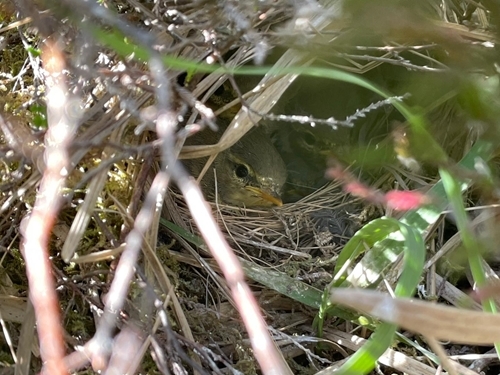
Willow warbler nest - Ellie Ness
In farmland, the risks multiply. Skylarks, corn buntings, yellow wagtails, and grey partridges all build nests in crops, margins, hay meadows, and grasslands. It’s a bold strategy, but a risky one. Nests are accessible to predators, vulnerable to trampling by livestock, and at risk of from machinery during hay cuts or harvest. These birds are the focus of the Farmland Ecology Department’s research.
A current project monitors corn bunting nests, looking at nestling diet and habitat use. The team works with surgical precision. One person enters, every step placed between crop rows, stems brushed back into place so no predator can follow. It’s slow, deliberate work, but it pays off, their predation rates are remarkably low. As Ellie says: “There is no such thing as being too careful.”
Wetlands
Move from farmland to wetlands and you will meet lapwing, once common, now struggling. They nest in colonies on moorland, wet grassland, and arable, preferring bare ground where their speckled eggs vanish into the soil. Males scrape shallow cups, females choose their favourite, line them with vegetation, and together they guard the nest. As our wetlands research assistant Bleddyn Thomas notes: “On bare ground, the eggs are remarkably camouflaged, practically disappearing against cultivated soil.”
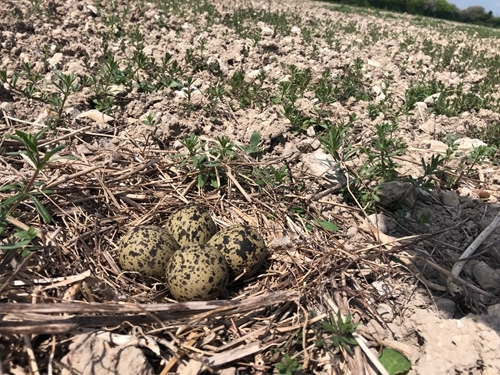
Lapwing nest - Bleddyn Thomas
But vigilance only goes so far. Eggs take around 26 days to hatch, and chicks remain vulnerable. Predators such as foxes, badgers and corvids pose major threats, while disturbance, tractors, and livestock can also destroy nests. Lapwing mothers even perform diversionary tactics - flying off noisily to rally neighbours, then sneaking back indirectly so predators don’t track them. Clever, but not foolproof. That’s why we test the best methods to support them using fallow plots, water meadows, electric fencing, and predator control to give them a fighting chance.
In wet grassland and saltmarsh habitats you may also find redshank, wading birds with distinctive red legs. They are noisy when setting up territories, but fall silent while incubating. Once widespread, BTO monitoring shows their numbers are now falling in response to changing agriculture.
Redshank are equally cryptic nesters, choosing tussocks of grass or sedge 10–20cm high and arranging vegetation so eggs are invisible from above. Once chicks hatch, they forage independently, guided only by parents to food and shielded from predators. Lizzie Grayshon has spent extensive amount of time monitoring this species for conservation purposes under BTO licence: “As a ground‑nesting bird, they are vulnerable to predators, but their cryptic nesting strategy offers protection in optimal habitat.”
Yet Lizzie makes a crucial point, this strategy only works in the right conditions. With agriculture fragmenting their distribution, what was once widespread is now patchy, and every scrape in the grass feels like a gamble.
Coastal habitat
Even on the beach you can find species nesting on the ground. Researching Eurasian Oystercatcher and Common Ringed Plover in coastal environments has revealed just how vulnerable these beach-nesting birds are during the nest and chick stage. Both nests and chicks are incredibly well camouflaged, making them almost impossible to spot amongst the shingle. They face threats of trampling by people, predation by opportunistic wildlife and pets, and habitat loss and flood events, which are increasingly exacerbated by climate change.
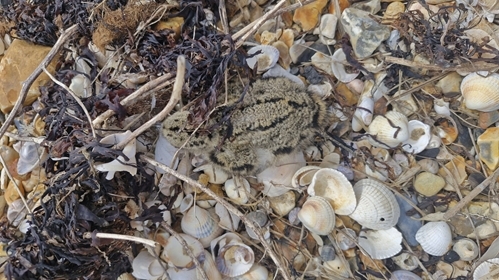
Oyster catcher chick - Rosa Hicks
The GWCT has been trialing innovative solutions to protect shorebird nests from these pressures, and improve hatching success. Working in these environments also requires extra care from researchers - we never take our eyes off the ground, when moving through breeding habitat, and when we are not actively searching for nests, we walk below the tide-line, where birds don’t nest to minimise disturbance.
Research assistant Rosa Hicks explains “Spending last spring on the coast, it was wonderful to witness many more chicks on our study sites, thanks to GWCT’s nest protection efforts.” However, it is becoming clear that the threats don’t end once the eggs hatch, and chicks remain vulnerable so the team continue research efforts investigating chick survival, helping to bolster productivity for these iconic ground nesting species.
Uplands
Head into the uplands and you’ll find ptarmigan and red grouse also relying on cryptic plumage to stay hidden. Sometimes, however, they’re not so clever, as our Senior Research Assistant in the Scottish Uplands, Kathy Fletcher explains: “This Ptarmigan nest was found in the middle of a path up one of the Scottish Munros, and unfortunately was abandoned, presumably due to disturbance.”
Red grouse more often nest in longer vegetation, but chicks leave the nest before they can fly, making them vulnerable. When monitoring during breeding season, Kathy notes: “I often try walking on shorter vegetation and have a stick with me to help me keep my balance on the uneven ground and if a bird flushes near my feet.”
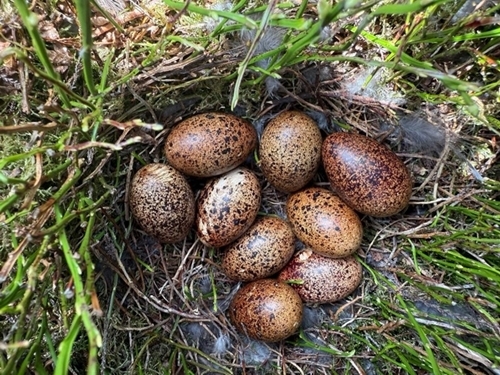
At the chick stage, parents try to distract intruders, so researchers usually take a few paces back and then head in the direction the parents are leading them to avoid disturbing the chicks - unless they are actually trying to find them to monitor their tick burdens.
Our early work showed that grouse in poor condition, burdened with parasites, were more prone to predation. Parasites make females emit more scent, effectively painting a target on them for mammals. It’s a reminder that vulnerability isn’t just about where they nest, but also about the unseen pressures inside their bodies.
Wales
In Wales the plight of ground nesting birds could not be closer to home. Curlew are estimated to be extinct in the region by 2030 if trends continue. Described by Curlew Connections Project Officer, Katie Appleby, as masters of secrecy, work monitoring this species often requires hours of quiet observation to understand their behaviour and spot signs of a nearby nest. She reports “If you are lucky enough to find a nest, there is honestly no better feeling.”
The team in Wales are locating nests in order to install electric fencing to exclude possible predators. We know this is a huge pressure to these birds with 22 of the 48 located nests predated in the last two years.
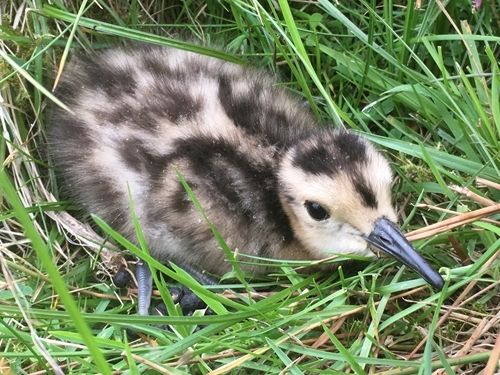
They have brought cutting-edge technology into the mix. A large drone has become one of our most valuable tools, not just for finding nests, but for monitoring chicks after they hatch. Instead of sitting for hours hoping to catch a glimpse of a chick darting through tall grass, the drone gives a bird’s-eye view (literally!). Regular checks help keep track of brood numbers more accurately and spot any losses, all without disturbing the birds.
As Katie says: “Every nest we protect feels like a step toward securing the future of these remarkable species.”
Scotland
And then there’s the capercaillie, Scotland’s icon and the poster child for ground‑nesting peril. Once 20,000 strong in the 1970s, their numbers have collapsed to around 300, mostly in Strathspey. Eggs and chicks fall to pine martens, foxes, and crows. Wet summers reduce survival. Deer fencing kills dispersing juveniles. Human recreation disturbs breeding. Despite decades of conservation, breeding success remains too low. As one GWCT scientist warned, “The extinction clock approaches midnight for Scotland’s capercaillie.”
Fiona Torrence, our Farmland Biodiversity Advisor based in Scotland, highlights that even our GWCT flagship species, the grey partridge, faces its own gauntlet. Reduced habitat, predation, and bad weather make breeding a perilous season.
She explains: “At Balgonie, we have tried to reduce the effects of these factors, by providing wider (24m) and more diverse blocks of wild bird seed mix around the farm.” This not only provides additional nesting habitat but also reduces the distance to brood-rearing cover, as well as reducing the likelihood of nests being found by ground-based predators, allowing a higher chance of nesting success.
The results speak for themselves: autumn numbers up by 300% since 2014, and partridges now a daily sight. It’s proof that with the right people engaged, focussed habitat tweaks can tip the balance back in favour of survival. Fiona adds: “Its also been great to see how much the farmer has enjoyed being part of what we have achieved.”
Auchnerran demonstration farm
Auchnerran shows how our work in Scotland tackles the wider plight of ground‑nesting birds. Lapwing, oystercatcher and curlew return here each year, despite the pressures of high predation and fluctuating numbers. Their presence demonstrates that farming and waders can coexist, but only when nature‑friendly practices are rigorously applied.
Research at Auchnerran has tested practical solutions - from adjusting livestock exclusion periods to marking nests and maintaining suitable breeding habitat. These measures have allowed farming to remain productive while still supporting wader populations, even as numbers collapse elsewhere in the UK.
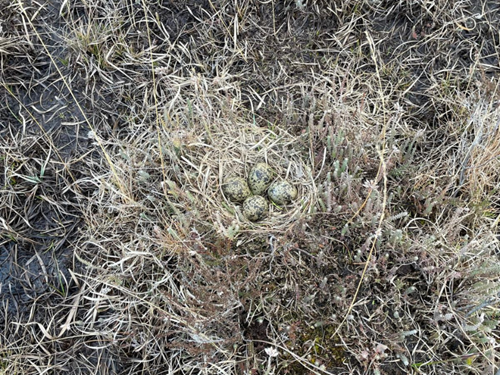
Lapwing nest - Ellie Ness
Predation remains the biggest challenge, and protected species add new complexities, but the lessons from nearly a decade of monitoring at Auchnerran are clear: improving prospects for Scotland’s ground‑nesting birds depends on both science and farming communities working together.
Max Wright, who spent many years working on the Auchnerron farm reflects: “Auchnerran has demonstrated that it is possible to increase farming efficiency and productivity alongside breeding waders.”
A Chorus of Expertise
From Ellie’s farmland bunting nests to Bleddyn’s lapwing scrapes, Fiona’s partridge seed blocks, Katies curlew drones and Kathy’s upland grouse, the Trust’s researchers show the breadth of challenges and the ingenuity of our responses.
Together, their voices remind us that many birds, while inconspicuous by design, live precariously at ground level, hidden in crops, tussocks, or heather. Protecting them means recognising their vulnerability, celebrating the expertise that watches over them, and ensuring that the ground beneath their feet is not the most dangerous place of all.
Please note, all birds monitored under appropriate licensing.