The Game & Wildlife Conservation Trust is urging all shoots across the country to take part in the National Gamebag Census – the only national survey recording the number of gamebirds shot each season.
 GWCT principal scientist Dr Julie Ewald, whose team conducts the data analysis of the survey, which has been running for 65 years, says: “With increasing scrutiny of gamebird management and the threat of restrictive legislation of predation management it is more important than ever that shoots return their annual bags and predator control records to the GWCT for analysis. It’s completely confidential and super easy to do.
“Expanding participation is vital because the value of the NGC lies in the breadth and consistency of its long-term dataset. NGC data underpins research used to guide national policy on gamebird releasing and counters false claims in the media. It helps safeguard the future of game management by increasing public trust and perception of shooting as a sustainable countryside activity. It also supports conservation, helping to track population changes in species such as pheasant, partridge, grouse and hare, informing habitat and predation management.”
GWCT head of lowland research Dr Rufus Sage said: “My research group and others inside and outside the GWCT regularly draw on the NGC. For example, it is widely assumed that foxes respond to gamebird releases and that there are more of them in the landscape because of releasing. This is reasonable, but the NGC provides a different perspective on this question. Since 1990, the NGC pheasant releasing index has increased by three times, but the NGC fox culling index shows more or less a flat line over the same period, so you have to question the original assumption.”
The NGC has well-documented data on 24 huntable bird species, 11 'pest' bird species and 19 mammal species. Many of these species covered by NGC are monitored by other UK schemes, but no other annual scheme matches the historical span of the NGC. Though it was established in 1961 its data set incorporates bag records reaching back to 1793. This is thanks to estates allowing the entries in their historic gamebooks to be inputted into the database.
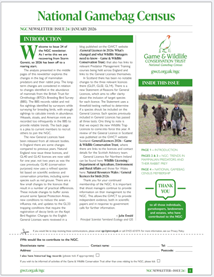
Participants in the survey have exclusive access to broader trend reports and benchmarking information, enabling shoots to identify issues early and adopt best practice. They also receive a newsletter detailing fascinating insights into species trends. The latest issue looks at long-term data on rabbit numbers versus their predators (foxes, stoats, and weasels) and considers drivers for population fluctuations.
To join the National Gamebag Census and receive a copy of the newsletter, visit Join the National Gamebag Census - Game and Wildlife Conservation Trust.