Written by Henrietta Appleton, Policy Officer (England)
I imagine that many of our blog readers are countryside dwellers (but if you are not, please keep reading!). Like me, they were brought up in the countryside and (perhaps like me after a brief spell chasing the pot of gold at the end of the rainbow in London) continue to live there. Many of us will not be direct custodians of the land but we have an empathy with the rhythms and cycles of the rural way of life, having lived and worked within it.
Given this, it is with great sadness that I feel the rural way of life is at risk from the urban-centric focus of our national and international policies. As part of my job, I seek to reinforce the value of rural land management on a daily basis. But, uncomfortably perhaps, this blog seeks to go beyond that and to consider the wider consequences of the urban nature of our political system. I see it as the rural deficit; the price we pay for the externalities (if you like) of urban living.
There are the everyday aspects of life such as the poor state of our roads with the daily weave round potholes, which, as my husband says, are often so deep you can see the miner and his lamp in it! Whilst we need to both adapt to and reduce the impacts of climate change (through changing our ‘living systems’, increasing ecosystem resilience and reducing our emissions), the seeming demonisation of the internal combustion engine in cars and other vehicles because of net zero ambitions weighs more heavily on the rural dweller than urban. We cannot simply walk to the doctors or hop on an electric bus or cycle to the shops. Petrol- and diesel-driven vehicles have become integral to our way of life through need. This has resulted in extra costs – not just of the tyres that are destroyed by the potholes but also of increased fuel prices, the need to drive further to services, etc.
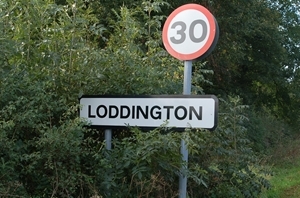 A recent planning application for a single dwelling in the village of Loddington, home of the GWCT Allerton Project, was denied by the local planners on the grounds that the development would encourage car ownership as there is no public transport to and from the village. When the applicant spoke to the local bus company, they explained that there were not enough residents in the village to make a bus service viable. So we have a classic ‘chicken and egg’ situation. I am sure you can think of many more.
The impact of net zero goes wider than this. It impacts farmers and land managers through the consequences of climate change. Many have flooded fields after the recent storms which, depending on the length of time the field/crop is covered in water, may have a significant impact on the 2026 farm income. There are some actions farmers and land managers can and do take to ease this impact such as improving soil quality, but in some cases, as was mentioned in a recent Farming Today, the flooding is a direct result of poor planning decisions to build on former flood plains. If this is the case, then the farmer and land manager needs to be compensated for the role he is playing in mitigating flood risk elsewhere and for ‘storing the water’. Another externality of urban living?
But the rural deficit is also cultural. The rural-urban divide has become accentuated over the decades since the industrial revolution with, it is estimated, 99% of urban society detached by at least three generations from the countryside such that urban dwellers’ active living memory of the countryside will dwindle to zero by 2028 – two years’ time. The memory they do have is formed by television programmes that sanitise the rural way of life and anthropomorphise nature. The young of birds are called babies, not chicks or fledglings; farming is about cuddly lambs, not the searching for pregnant ewes in snow drifts or those that have been ‘rigged’ (rolled onto their backs and cannot right themselves); and living in a village is about chocolate box cottages and walks in bluebell woods, not the poor broadband and the village shop closing due to the increase in online shopping.
Sticking to my day job a bit more, I am concerned that our cultural heritage is being impacted by the fact that much of it is uncomfortable to the current generation – the 99%. I have recently been reading the North Pennines National Landscape draft management plan, which, encouragingly, has a whole section on our cultural heritage. It focuses on the tangible, intangible and natural heritage inherent in that landscape and it seeks to adopt measures that it hopes will conserve this valuable local knowledge.
Cultural heritage is defined as “the legacy of physical artefacts and intangible attributes of a group or society that is inherited from past generations. It represents the collective identity and history of a group of people or a place.” Therefore, it consists of physical features in our landscapes, village locations and names, field systems, folk traditions, tales and songs as well as below ground archaeology.
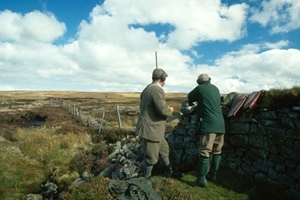 Historic England’s guidance for the sustainable management of this cultural heritage assesses an asset’s significance based on attributes such as its historical value but also its communal value. The latter allows for the meaning of the place/asset for the people who relate to it or for whom it figures in their collective experience or memory. Based on the urban society statistics I quoted earlier, this communal value is arguably being diluted. As a result, the story of the cultural heritage of the North Pennines includes its religious and monastic history, its industrial history, and its aesthetic value as espoused by the writers and artists who have recorded it. But there is little about farming knowledge (although there is reference to field patterns and structures) and no reference to game shooting or hunting’ tangible and intangible heritage, which are a part of its economic, biodiversity and cultural heritage.
Game management and hunting will have impacted on the landscape through the placing of woods as game or fox coverts. Research by York University in 2023 identified a link between game estates, which became particularly prolific in the 18th and 19th centuries, and our protected landscapes and the maintenance of “certain management regimes over long periods of time resulting in highly-valued biodiversity.” Then there are the songs and tales relating to the exploits of famous huntsmen and their dogs and horses – for example, the songs of the Holme Valley Beagles in the South Pennines, or the well-known Cumbrian hunting song D’Ye Ken John Peel. But what of recording these traditions and knowledge in the North Pennines and in other rural areas? I hope the North Pennines National Landscape Partnership, as part of its plans for oral histories and documentation of local traditions, fills this gap.
There are other tangible features such the lines of grouse butts and the heather management, which help frame the moorland landscape we see (and value) today, and even the naming of drives and beats (areas covered by a gamekeeper) reflecting their cultural history. Just looking at the OS map for the Teesdale and Weardale area yields some wonderful names that reflect the history of this landscape. Hardberry Hill and Coldberry are in close proximity and may reflect that these areas were cold and held little natural food, which, for the wild game hunters of previous centuries, would have been vital information. Or Snowhope Moor likely originates from the term ‘snaw’ (snow) and ‘hop’ (valley) and reflects that it remained covered in snow longer than surrounding areas. There are also names like Raven Seat, reflecting wildlife sightings.
But this part of our cultural history is at risk from the sanitisation of our rural way of life. The idea that the taking of one life (a fox) to protect another (wild birds or lambs) is abhorrent to those who have not grown up witnessing the devastation that these predators can cause. The fact that predator management practices now undertaken to achieve this have evolved to make them more selective and to respect the welfare of the target species is ignored as the whole idea is unpalatable. Whilst game shooting has evolved beyond the pursuit of wild game to include released game, our urban society is unwilling to consider the value that this brings to nature recovery because of the anthropomorphic view of the countryside and its wildlife that is perpetuated by those who disagree with the pursuit.
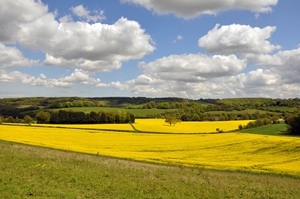 Farming is also at risk. Prescriptive policies that are based on a one-size-fits-all approach to addressing environmental decline (I include both wildlife and our ecosystems here) fail to acknowledge that farming systems and practices have been tuned over time to ‘fit’ the soil, aspect, climate, gradient and height of the field, farm and landscape. Much of this is evidenced by historic field names, now largely lost from everyday life. It is policy that has often destabilised this balance; post-war in pursuit of food production and now the opposite focus on environmental recovery and net zero.
This single focus approach to farming and environmental policy is ignoring not only the everyday aspects of life in the countryside but the cultural history and natural history of rural land management practices (farming, shooting, hunting). This is risking the very landscapes that we have protected through designations such as national parks and national landscapes – and the way of life that depends on them.
I end by referring you to the poem Going, Going by Philip Larkin about his sense that England’s rural landscapes and local character are being eroded – a couple of excerpts give you the feel of his fear – and mine.
Things are tougher than we are, just
As earth will always respond
However we mess it about…
Most things are never meant.
This won’t be, most likely; but greeds
And garbage are too thick-strewn
To be swept up now, or invent
Excuses that make them all needs.
I just think it will happen, soon.
(Note: These monthly musings are intended as interest pieces and to provoke thought. I do not pretend to have deep knowledge about the subjects I am covering or indeed to be comprehensive in my coverage. I hope you enjoy reading them as much as I enjoy researching and writing them.)