Written by Jobe Burnham, Allerton Project Conservation Officer
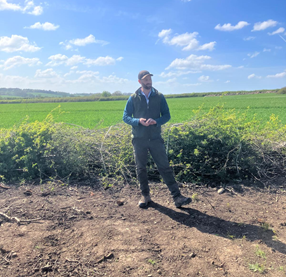 Something I have continued to experiment with this winter is what I call the “conservation lay” approach to hedgerow management. As described in previous blogs, last winter I laid a section of hedge using a rough-and-ready method — quick, untidy and very much focused on delivering immediate benefits for wildlife, particularly in the short term. Perhaps it is “reinventing the wheel”, but experimentation is at the heart of what we do at the Allerton Project, so it seemed well worth trying.
The ambition behind this approach is to create a wide, dense hedge that provides instant nesting habitat for farmland birds and a structurally diverse environment for a range of species. I certainly do not want to detract from traditional hedge laying — a highly skilled craft that has been practised for centuries. However, when reading articles and blogs on hedge laying, particularly those focused on the Midlands Bullock style, much emphasis is placed on producing a stock-proof hedge. Yet farming practices have changed dramatically over recent decades. Permanent pasture has often been replaced by arable cropping, and there are now far fewer grazing livestock within much of our landscape. In many situations, the requirement for a stock-proof hedge is no longer the primary objective.
Instead, the purpose of laying hedges between arable fields is increasingly centred on wildlife conservation and hedgerow rejuvenation. Maintaining hedges within an active life cycle, increasing their density, and encouraging a diversity of hedgerow species are some of the most valuable tools we have for supporting nature in farmed landscapes.
I was very pleased with the hedge I laid during the winter of 2024/25. Birds nested within it during the spring and, together with the tussocky grasses and emerging wildflowers, it now provides excellent habitat. However, one clear drawback became apparent: in many places there was limited new regrowth. The density of the laid material had shaded the stool and prevented vigorous new shoots from establishing. Critics of the method could fairly say, “I told you so.”
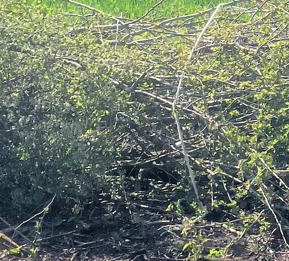 This winter I have used a similar approach, laying almost all available material, but at a steeper angle and further out into the field, away from the ditch. This leaves the stools of the original hedge line far more exposed and gives them every opportunity to produce strong new regrowth. I have also deliberately left deadwood within the hedge, as it provides essential habitat, food and shelter for countless invertebrates throughout their life cycles.
Another criticism of the approach has been the lack of stakes and binders. Without them, could the hedge be vulnerable to strong winds, potentially damaging the pleachers or even blowing sections into the field? There is also the possibility that, without binding, some pleachers may simply grow vertically again, eventually creating the leggy, bottomless hedges dominated by runners that we all dislike.
As with many great — or perhaps ridiculous — ideas, the solution emerged during a conversation in the pub. A friend told me about a sustainable rope product he produces: 100% biodegradable, locally sourced, and more cost-effective than traditional stakes and binders. It seemed a potentially simple solution, so I ordered some to trial. I tied the rope across the hedge every couple of metres and was surprised by how effectively it compacted and stabilised the laid material, which I see as a real positive. As the rope is biodegradable, I have no plans to remove it, although time will tell how well it weathers and performs in the long term.
Only time will tell whether this method proves beneficial, but that is ultimately the point of experimentation.