- Trichostrongylus tenuis is a parasitic worm long known to reduce body condition, survival, and breeding success in red grouse.
- This study provides the first strong evidence that the parasite is also widespread in wild black grouse in northern England: 63% of black grouse carcasses examined were infected,compared with 95% of red grouse.
- Although average worm numbers in infected black grouse were 75% lower than in red grouse, the body condition of black grouse deteriorated as worm numbers increased. Birds with heavier infections were more likely to be killed by predators.
- Breeding success of black grouse was low in years with high levels of parasite infection. This is worrying given the vulnerable status of black grouse.
- The study found no detectable link between annual parasite levels in red and black grouse, suggesting no strong evidence of cross-species transmission, despite their overlapping habitats.
- It remains possible that birds already in poorer condition are more vulnerable to infection. Continued monitoring and, where appropriate, targeted parasite control, may be useful for improving outcomes where red and black grouse mix.
Background
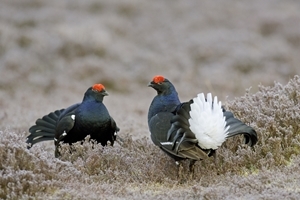 Black grouse have declined across much of Europe. In the UK the species is red-listed as a bird of conservation concern owing to numbers falling by over 50% in the last 25 years. In the North Pennines and Yorkshire Dales, they live close to moors managed for red grouse shooting. Red grouse numbers famously rise and fall in cycles linked to an internal gut parasite, the strongyle worm (Trichostrongylus tenuis). The parasite affects body condition, survival, breeding success, and even suppresses territorial behaviour in males. Alongside habitat and predation management, a key tool used to maintain high red grouse numbers is medicated grit, coated in a worming agent.
It was thought that the worm could not establish in black grouse and a lot of evidence from across Europe confirmed little to no sign of the parasite in black grouse. However, samples from Germany and Czechia have reported its presence in low numbers. In Northern England, black grouse share habitats with managed red grouse, especially overlapping in winter and early spring when both forage on heather and early flowering buds of cotton-grass. There is opportunity for cross-species transmission of the worm larvae at this time and so scientists wondered whether these parasites might spill over into black grouse and contribute to their low regional breeding success.
What they did
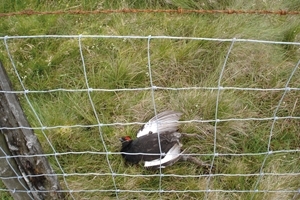 Researchers collected and examined 186 black grouse carcasses from northern England between 1998 and 2022. Birds came from a mix of radio-tracking studies, birds found dead, and some supplied by hunters. Data collected on each dead bird included age (adult or juvenile), sex, weight, wing length, season of death (spring, summer, autumn, winter) and cause of death (collision, predation, shot, other). The ‘other’ cause of death category was assigned when the bird did not align with the other previous three categories, often when it was thin, unable to fly and likely included birds dead from disease.
They counted gut parasites, mainly T. tenuis, and compared infection levels with those found in thousands of red grouse taken from the same region. Infection levels were measured by prevalence, intensity and abundance of the parasite species. Other parasites were also noted, including Heterakis worms (potential carriers of the disease histomonosis) and a tapeworm (Parionella urogalli).
Between 2000 and 2022, researchers monitored worm burdens in autumn-shot red grouse on three driven moors in Teesdale, the North Pennine dale that also accounted for 59% of recovered black grouse carcasses. Over this period, spring densities of red grouse averaged 57 pairs per square kilometre, fluctuating three- to fourfold between lows of around 27 pairs and highs of 92 pairs per square kilometre. For five years, juvenile grouse were not sampled because worm levels had previously been extremely low. The number of adult grouse examined each year varied widely (range 14–546), averaging 194 birds.
The red grouse worm burdens were assessed using the same methods as for black grouse. Black grouse breeding success was also measured annually between 1998 and 2022 at up to three Teesdale sites, using pointing dogs to locate females and broods. Across the study, 890 females were recorded, an average of 36 per year at mean densities of 3.5 females per square kilometre. For each year, three measures of breeding success were calculated: the proportion of females with broods, the average number of chicks per brood, and the number of chicks reared per female.
Statistical models were used to test whether heavier worm infections were linked to poorer body condition and to compare infection trends in black grouse and red grouse from the same area. Finally, researchers looked at whether years with higher worm levels corresponded to lower breeding success in black grouse.
What they found
The most commonly recorded cause of death amongst the 185 black grouse was collisions with (in order of frequency), road vehicles, fences and overhead electricity wires. Collectively they accounted for 72 (39%) carcasses and were closely followed by 57 ‘other' carcasses (31%), which included 11 birds that were in poor condition, underweight and unable to fly, three of which were later diagnosed by a veterinary practitioner as having symptoms of histomonosis (a parasitic disease not linked to strongyle worms). 32 birds were shot (17%) and 24 were predated (13%), by stoat in 11 cases, raptors in nine and domestic dog on four occasions, two of which involved weak birds unable to fly.
T. tenuis was common in black grouse, present in 63% of carcasses, with an average of around 390 worms in infected birds. 12 carcasses (6%) contained more than 1,000 worms, with a maximum of 5,940 worms. In comparison, 95% of red grouse were infected, carrying on average four times as many worms (1,535), with maximum burdens exceeding 25,000.
Worm numbers fluctuated widely from year to year in both species, but there was no detectable link between parasite abundance in red and black grouse, nor between black grouse breeding success and the average abundance of worms in red grouse. The average intensity of worm infestation did not differ by region, sex, age or season.
Based on carcasses, black grouse body condition deteriorated as worm numbers increased. Those killed by predators also had worm counts two to four times higher than those dying from other causes, suggesting that parasites may increase vulnerability to predation. Black grouse breeding success, measured both by the proportion of females raising broods and the number of chicks per female, was lower in years when mean worm abundance from black grouse carcasses was higher.
What does this mean?
This study shows that parasites, particularly T. tenuis, likely contribute to the poor regional breeding performance of black grouse, counteracting the boost to their survival wrought by the reduction of predator abundance as part of red grouse management. While the worms are much less abundant than in red grouse, even moderate levels of infection appear to reduce body condition and reproductive output.
Parasites can reduce birds’ ability to breed successfully or make them more vulnerable to predators. Heavy worm burdens damage the gut lining, which may increase scent emissions and make birds easier for mammalian predators, such as stoats, to locate. In this study, birds killed by predators tended to have much higher worm burdens than birds that died of other causes, and stoats were the most frequently identified predator (46% of predated carcasses).
Despite the two species often foraging alongside each other, the study found no evidence that red grouse were actually passing parasites to black grouse. The lack of a direct link with red grouse suggests that black grouse infections may arise from shared environments rather than spillover, or that birds in poor condition after winter are more susceptible to infection.
The occasional presence of Heterakis hints at possible risks from mixing with other gamebirds like pheasants. These can carry Histomonas meleagridis, which causes the disease ‘blackhead’. While pheasants can carry this parasite with little harm, grey partridges and potentially black grouse can be severely affected. Three black grouse in the study showed confirmed signs of histomonosis.
Overall, parasites are an under-recognised challenge for conserving this declining species. The researchers note that most studies look at only one parasite species at a time, but birds are often infected by several parasites together. Ongoing monitoring and potentially even targeted treatment (which has been effective in red grouse management) could be important in supporting black grouse recovery.
Read the original paper
Baines, D. and Aebischer, N.J. (2025), Helminth gut parasites of black grouse Lyrurus tetrix in northern England, their impact on productivity and possible sources of infection. Wildlife Biology e01472.