Key points
- Rough grass margins on farmland were linked to higher small mammal activity and better barn owl breeding success.
- Wildflower-rich margins did not show the same benefit for small mammals or barn owl breeding success as rough grass margins.
- Field voles and wood mice were important prey species, and rough grassy habitats are likely to support them well.
- The findings support keeping and improving tussocky grass margins in agri-environment schemes to benefit barn owls and wider farmland wildlife.
Background
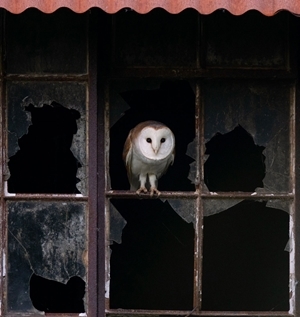 Barn owls are one of the UK’s best-known farmland birds, often seen hunting over rough grass at dusk. However, their populations declined sharply across Europe from the 1940s, mainly due to habitat and nest site loss, declining prey numbers, road deaths, and the accumulation of rodenticides and pesticides in the food chain (known as bioaccumulation). In the UK, numbers have begun to recover in recent decades, possibly helped by nest box schemes and the banning of some harmful chemicals.
Because barn owls feed largely on small mammals like voles, mice and shrews, they are expected to benefit from farming practices that support these prey species. Schemes that pay farmers to create wildlife-friendly habitats, such as agri-environment schemes (AES), may benefit owls and their prey by increasing the availability of grassy margins, field edges and other features that support small mammals. However, no schemes are directly designed to improved habitat for small mammals and there has been little research directly testing how AES habitats relate to prey abundance and owl breeding success in the UK.
This study, led by the GWCT, set out to find out whether different types of AES habitats, such as grassy or wildflower field margins, influence small mammal activity and how this, in turn, affects barn owl nesting success.
Photo credit: Oly Berriman
What they did
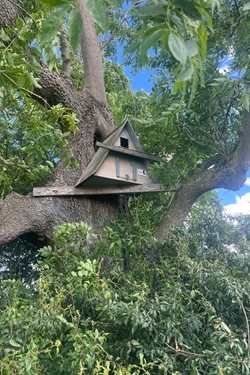 Researchers monitored barn owl nest boxes and small mammal activity across two large Farmer Clusters in southern England. The Martin Down and Allenford clusters cover around 13,000 hectares of farmland across Dorset, Wiltshire and Hampshire. These clusters are farms working together to facilitate and coordinate their conservation efforts. This collaboration includes management of AES habitats such as tussocky grass margins, wildflower strips, beetle banks and hedgerows.
Between 2018 and 2021, around 60 barn owl nest boxes were monitored annually. Nest box occupancy, breeding attempts and fledging success were recorded. From 2021, the researchers used small cameras on poles to check inside boxes (to minimise disturbance) and noted the number of adults, eggs and chicks throughout the breeding season.
The core analysis focused on 14 1km² survey squares, each containing one nest box with known breeding history. These squares were chosen to represent areas with successful and unsuccessful breeding histories. Seven of the squares in contained nest boxes where owls had bred successfully in recent years, and seven contained nest boxes where they had not.
In the same 14 squares, prey activity was measured using ink-tracking tunnels. These are small baited tunnels that record animal footprints when the animal walks through an ink tray and across a sheet of paper. Ten tunnels were placed in each square, positioned at the borders between different habitat types, such as arable fields, grass margins, hedgerows and treelines. Each tunnel was checked daily for five nights to estimate small mammal activity.
Habitat types were mapped using farm data and Ordnance Survey maps, dividing land into categories such as arable, grassland, rough grass margins, floristic (wildflower) margins, hedgerows and treelines. In analysis, rough grass margins and floristic margins were classified as AES habitats and hedgerows and treelines were considered boundary habitats.
Statistical models were then used to test:
- Whether small mammal activity was higher in tunnels in AES or boundary habitats.
- Whether small mammal activity was higher in squares with greater areas of AES or boundary habitats and where barn owl boxes were occupied.
- Whether prey activity or habitat type (area of AES or boundary habitat) predicted higher barn owl nest box occupancy.
- Whether prey activity or habitat type (area of AES or boundary habitat) predicted the number of chicks successfully fledged.
What they found
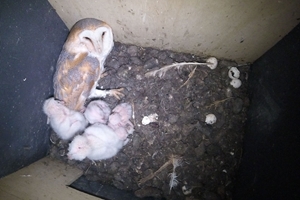 Barn owls bred successfully in eight of the 14 monitored nest boxes, with seven of these producing at least one fledgling. The remaining boxes were either empty or occupied by other birds of prey (a tawny owl and a kestrel).
Across the 14 study squares, small mammals were detected on about one in five (20.4%) of the 700 ink-tracking tunnel “trap nights,” and they were recorded across all 14 of the 1 km² squares. Squares with a greater area of rough grass margins had significantly higher levels of small mammal activity, as did squares with more hedgerows. However, at a smaller scale, when analysing the category of habitat tunnels were placed in, those next to wildflower-rich margins showed less small mammal activity, possibly reflecting how small mammals use these features within the landscape.
While the use of nest boxes by barn owls was not directly linked to prey abundance or habitat type, boxes in squares with more rough grass margins produced more chicks. This suggests that even if owls don’t necessarily choose sites based on prey availability, having plenty of rough grass nearby helps them raise more young successfully.
What this means
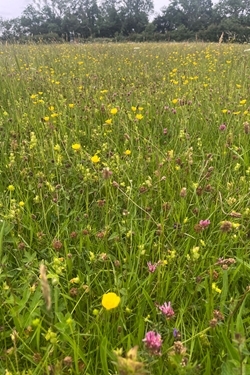 The study provides evidence that rough grass margins created under agri-environment schemes (AES) are particularly valuable for barn owls and their small mammal prey. These grassy strips appear to provide excellent habitat for voles and mice, which in turn improves the owls’ breeding success. This is despite the analysis failing to show a direct correlation between small mammal activity and barn owl site occupancy. This may be because there are other factors that influence site selection. Larger sample sizes may also assist in defining a clear relationship.
By contrast, wildflower-rich margins did not show the same effect on barn owl breeding success or their prey activity. These habitats are aimed at meeting the needs of pollinators or birds, so although they provide crucial habitat for these target species, the results of this study suggest they may not benefit small mammals in the same way. This may be because wildflower strips are typically mown or sown differently, and can lack dense grass cover, which some small mammals prefer.
While ink traps did not facilitate species-level identification of the small mammals, pellet collection at the nest box sites revealed that wood mice and field voles were the most popular prey items. The leaves and stems of grasses are essential food resource for field voles, so it is likely that this further supports their populations in grass margin habitats. Wood mice have a less specialised diet so there is potential that non-grass-specific farmland habitats still support this small mammal species. This could explain why other studies have found a positive correlation between the prevalence of wood mice in barn owl diets and the increasing coverage of various AES on arable farmland.
The results highlight that habitat structure and location matter. Rough grass next to hedgerows or tree lines may offer both shelter for small mammals and good hunting conditions for owls. However, owl nest box occupancy likely depends on other factors too, such as competition with other raptors, nest box design, or proximity of other barn owls.
Overall, this research supports continued inclusion of tussocky grass margins within AES as an effective option for supporting farmland biodiversity. It strengthens the case that managing margins for a mix of wildlife, including predators like barn owls, benefits the wider ecosystem. Further work is already underway by the GWCT to specifically explore barn owl habitat use, by using GPS-tracking to study owl foraging behaviour. This will help us examine barn owl use of other AES habitats and further refine AES design to better provide landscapes suitable for foraging owls and other raptors.

Read the original paper
McHugh, N. M., Case, J., Heward, C. J., Ness, E. R., Baker, M., & Burrell, R. A. (2025). Relationships between breeding Barn Owls Tyto alba, their prey, and agri-environment scheme habitats in lowland arable landscapes. Bird Study, 72(2), 161–167.