With BBC Gardeners' World and Insect Week (22 - 28 June) recently drawing attention to pollinators, and a new GWCT Solitary Bee Project Appeal underway, now seems like a good time to revisit one of my favourite invertebrate groups.
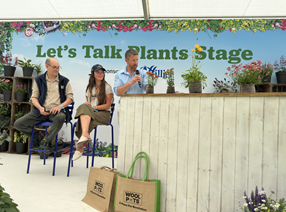 I was fortunate to spend time with the team at Wool Pots at Gardeners' World Live, discussing how sustainable gardening approaches can support wildlife. What struck me was how many of the show gardens featured native plants and habitats that would not have looked out of place in a well-managed field margin or along a farm hedgerow. The overlap between great gardening and great conservation is often greater than we think.
But for many GWCT supporters, the importance of pollinators hardly needs explaining. So rather than rehearse the usual messages about bees and butterflies, perhaps it is more useful to ask: where should we be focusing our efforts if we want the biggest return for wildlife?
Simply creating flower-rich habitat may not be enough. The GWCT's Sussex Study recently reported a 37% decline in insect abundance in cereal crops between 1970 and 2019. These are not just pollinators. They include the caterpillars, beetles, flies and other invertebrates that underpin farmland food webs and provide vital food for many bird species.
We've seen similar warning signs elsewhere. During repeat surveys, GWCT researchers recorded 70% fewer red-tailed bumblebees during the particularly wet year of 2025 compared to surveys in 2019, while the Corn Bunting Project highlighted the near disappearance of caterpillars from chick diets on some farms during 2025. Adults were forced to switch to poorer-quality food such as spiders, resulting in reduced chick growth and survival.
Are we planting the right species?
Research highlighted through Dr Rachel Nichols' work identified six plant species that support a large proportion of our common wild bee community:
- Dandelion
- Wild carrot
- Hedgerow cranesbill
- Smooth hawksbeard
- Rough hawkbit
- Spear thistle
These species are perhaps less glamorous than many commercial wildflower mixtures, but they appear repeatedly as key forage plants for pollinators. Our Grey Partridge Mix contains many valuable floral species and at ratios that mean your investment lasts much longer than other commercial mixes padded out with grass. These longer standing habitats really bring out the best for our ecosystems as research from our farmland ecology department has recently proved.
Many plant species provide benefits extending far beyond bees. Some of my favourites include:
- Wild carrot, attracts hoverflies and parasitic wasps as well as pollinators. These insects are important natural enemies of aphids and other crop pests.
- Yarrow is another standout species, supporting hoverflies, beetles and parasitic wasps while thriving in the nutrient-poor conditions typical of many field margins.
- Common knapweed remains one of the most valuable late-season nectar sources available to pollinators, while also providing seed for finches when allowed to stand through autumn.
- Birds-foot trefoil is valuable not only for bumblebees but also as a larval food plant for many butterfly species.
Don't overlook hedgerows
While flower-rich margins often receive most of the attention, diverse hedgerows may provide some of the greatest returns.
A hedge containing, hawthorn, blackthorn, dog rose and elder can provide nectar resources from early spring onwards while also producing berries, hips and shelter for farmland birds later in the year.
Blackthorn flowers exceptionally early, providing one of the first significant nectar sources of the season. Hawthorn blossom supports huge numbers of insects, while dog rose and elder continue the succession through summer before producing autumn food for birds.
This is an important reminder that insect conservation and bird conservation are often the same thing.
Think beyond nectar
One lesson emerging from recent research is that we sometimes place too much emphasis on flowers and not enough on the insects they produce.
Many farmland birds are not feeding chicks on adult bees or butterflies. They are feeding them caterpillars, beetle larvae, sawfly larvae and other soft-bodied invertebrates. That is why plants such as dandelion and clovers. They support entire insect life cycles rather than simply providing nectar to adults. Because ultimately, the same flowers that support wild bees can also support hoverflies, moths, parasitic wasps, predatory beetles and the birds that depend on them. And that's where some of the biggest gains for farmland biodiversity may now lie.