Key points
- Management strongly reduces heather dominance, opening up the plant community.
- Cutting generally causes less initial damage to mosses than burning, and leaving brash slows the creation of bare ground.
- Burning creates the fastest early boost in cotton‑grass flowering, a valuable food for grouse.
- Sphagnum can recover well, but its short‑term response depends on treatment and local wetness.
- Vegetation recovery varies hugely between sites, especially with altitude and water‑table differences.
Background
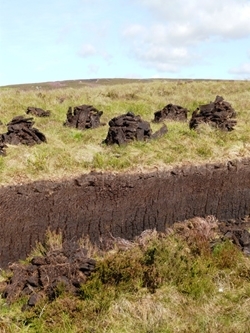 Peatlands form when carbon-rich organic matter accumulates in waterlogged anaerobic conditions where the pH is low, resulting in slow decomposition rates and, crucially, the sequestration of carbon. The UK’s cool, wet climate is perfect for peatland formation, supporting 13% of global blanket bog. The mosaic of vegetation across blanket bog is often dominated by dwarf shrubs like Heather, cotton-grass and sphagnum moss.
Charcoal in peat deposits suggests that fire has been used over the last 6,000 years to promote the landscape for livestock grazing. In the last 200 years, fire has also been used to optimise the habitat for red grouse. Prescribed strip burns on 15-30 year rotations have been shown to improve forage quality, preventing overgrowth of the canopy layer while minimising damage to the moss layer and underlying peat.
Around 80% of UK peatlands have been degraded through afforestation, pollution, overgrazing, drainage and both deliberate and unintended burns, making the role of fire in peatland management increasingly contentious. The rise in prescribed burning, even on protected conservation sites, has fuelled concerns about ecological damage, changes to bog habitat, and downstream effects on water quality and aquatic invertebrates. Because most prescribed burning is linked to grouse moor management (already a polarising topic), debate around its ecological impact has become highly charged, with conflicting interpretations of the evidence and disagreement over whether burning should be viewed as inherently damaging.
Research to date has often relied on a single long‑term experiment, with many newer studies being short‑term or based on indirect comparisons. Recent regulation has tightened restrictions on burning across blanket bogs, prompting many managers to shift toward cutting as an alternative, even though its long‑term ecological effects remain poorly understood and may also include damage to bog structure and increased wildfire risk. Recognising these knowledge gaps, new long‑term replicated experiments are needed. Alongside a government‑commissioned Before-After-Control-Impact (BACI) study, the GWCT established its own BACI experiment in 2019 to compare burning, cutting and no‑management approaches to better understand their impacts on peatland vegetation and ecosystem services.
What they did
This study set out three key expectations (hypotheses):
- Management by prescribed burning or cutting will reduce heather dominance, thereby promoting increased cover of sphagnum and cotton-grass relative to that in no-management (control) plots,
- Cutting will reduce moss depth relative to that in burn and no-management plots,
- Cutting and leaving brash (Cut-Leave) will delay vegetation responses relative to those in cut plots where brash is removed (Cut-Remove).
Five sites were selected where burning consent was either not required or already existed in 2019 under Natural England consents. Study sites included grouse moors in Coverdale and Swaledale (Yorkshire Dales National Park) and in Teesdale, Tynedale and Weardale (North Pennines Protected Landscape).
At each of the five sites, four areas of mature heather and similar topography were identified as experimental blocks, and in each block the researchers established four 400m² plots, one for each treatment type for burning, cutting (brash removed), cutting (brash left) and no management.
The team first recorded baseline information such as peat depth, plant cover, moss depth and vegetation height. They also installed dipwells, simple monitoring tubes used to measure the depth of the water table in peat or soil.
Management was then carried out by local moorland staff in March 2020 using best-practice burning and cutting techniques. On cut plots, brash was either taken away or spread back across the ground.
The scientists returned each October between 2020 and 2024 to measure how the vegetation changed in each plot, looking at:
- How much heather, moss and cotton-grass was present
- How tall the vegetation was
- How thick the moss layer was
Statistical analyses then compared how each treatment performed across sites and years.
What they found
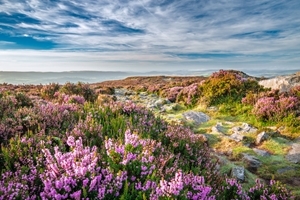 The five study sites differed in altitude, peat depth and wetness. Teesdale was the wettest, with the deepest peat and nearly half its ground covered in Sphagnum. Swaledale, the highest site, had thin-stemmed heather and very little Sphagnum cover. Across all sites, heather dominated the vegetation, making up around three quarters of plant cover.
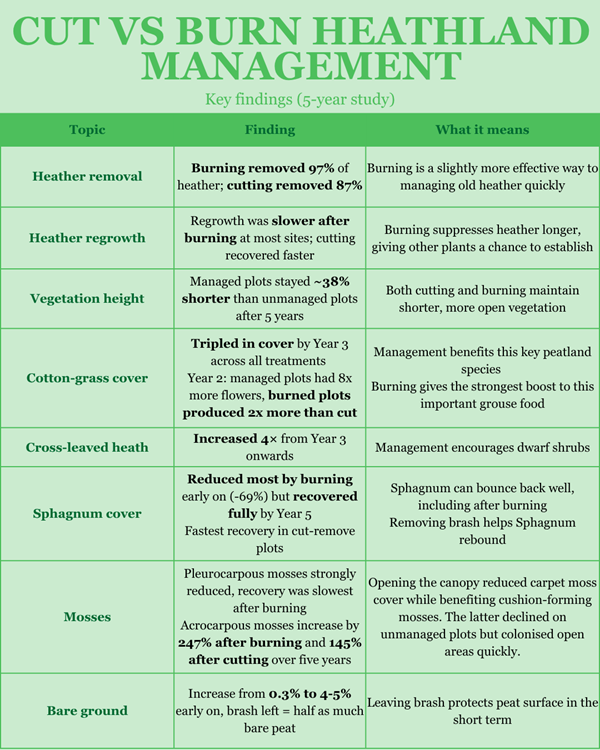
Management interventions reduced both heather cover and vegetation height relative to pre-management measures and no-management controls. After the first post-treatment growing season, vegetation height on managed plots was much shorter than on unmanaged plots, especially at higher, cooler sites where regrowth was slow.
Heather
Burning and cutting both removed most heather in year one, with 97% loss of cover after burning and 87% after cutting. Heather regrew at different rates depending on the site. Heather recovered more slowly after burning than after cutting at wetter or lower sites (Tynedale, Weardale, Teesdale). After five years, heather cover was similar across burnt and cut plots at all sites except Tynedale, but remained below its original levels everywhere, with recovery varying from only 39% of original cover in burnt plots at Tynedale to near-full recovery in Teesdale.
Other dwarf shrubs
Cross-leaved heath (Erica tetralix) increased steadily in managed plots and was four times more abundant by year three. Crowberry (Empetrum nigrum) was reduced by both burning and cutting, but recovered fully by year five. Bilberry (Vaccinium myrtillus) increased mainly in burnt plots at sites where it was already present. Overall, management opened up space that allowed some less‑competitive ericaceous species to expand.
Cotton‑grass (Eriophorum vaginatum)
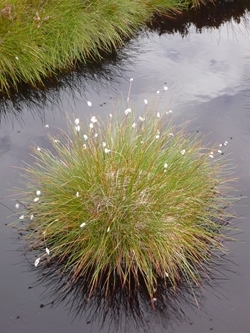 Cotton‑grass responded positively to all management types. Cover tripled, peaking in year three when it briefly became co‑dominant with heather. Numbers of its spring flowers, a key food source for breeding grouse, halved in the first year after management then increased dramatically in the next four years. In year two, managed plots produced eight times more flowers than unmanaged plots. Burned plots produced the most flowers early on. Another species, E. angustifolium, also increased from year three onwards.
Bryophytes (mosses)
Management reduced moss depth sharply (especially cutting), and even after five years, moss layers remained around 30% shallower than in unmanaged plots.
Before management, Sphagnum cover varied hugely between sites. All management types reduced Sphagnum initially, most severely after burning. However, recovery was strong: by year five, Sphagnum cover in managed plots was almost identical to control plots and higher than before management began. Recovery was fastest when brash was removed (Cut‑Remove).
Carpet-forming (pleurocarpous) mosseswere also hit hard by burning and cutting. Recovery was quicker under cutting, and quicker still where brash was left behind. However, by year five, cover remained lower than before treatment.
Cushion-forming (acrocarpous) mosses flourished after management: their cover increased by nearly 250% after five years on burnt plots, and by roughly 150% on cut plots. In contrast, unmanaged plots saw a major decline.
Bare peat was almost absent before management. Burning and cutting increased bare ground from 0.3% to 4-5% in the first year. Leaving brash after cutting halved the amount of bare peat exposed compared to removing it. By year five, bare ground had declined to between 1% (cut plots) and 2% (burn plots), slightly higher than before management.
What this means
Our study shows that removing dominant, over‑mature heather, whether by burning or cutting, opens up the ground surface and allows a wider range of important bog plants to flourish. Once the heather canopy is reduced, light reaches the moss layer, encouraging the growth of Sphagnum, Eriophorum vaginatum (cotton‑grass), a mix of other dwarf shrubs and cushion-forming mosses. The plants especially are important for creating and maintaining active blanket bog, storing carbon, and providing food for wildlife.
Although both cutting and burning cause short‑term disturbance, particularly to moss depth and Sphagnum cover, these effects are temporary. By year five, Sphagnum had fully recovered and exceeded pre‑management levels, even on burned plots. This finding mirrors several long‑term studies on grouse moors, which consistently show that the benefits of heather management outweigh short‑term impacts when carried out using best practice.
Different plants respond differently to each method:
- Heather and crowberry recovered faster after cutting than after burning.
- Bilberry and cotton‑grass flowers responded especially well after burning.
- Acrocarpous mosses (the ‘cushion’ mosses that help stabilise bare peat) increased after both treatments, particularly burning.
- Leaving brash on site favours pleurocarpous mosses but slows recovery especially for Sphagnum, which benefits most when cut material is removed.
Importantly, cutting and burning are not interchangeable. Cutting can be useful where burning is restricted, but it can flatten the bog surface, remove more of the moss layer and, if brash is left behind, increase wildfire risk. Burning, when done carefully under the right conditions, reduces fuel loads, maintains bog structure and prevents the build‑up of dry material that can ignite in severe wildfires.
The results also show that site differences matter: wetter sites with deeper peat respond differently from higher, drier ones. This highlights the need for long‑term monitoring, robust experimental design and site‑specific decision‑making, something often overlooked in recent Natural England reviews.
Overall, this study strengthens the case that prescribed burning and carefully executed cutting both have roles in maintaining healthy, functioning peatlands. Both methods help shift vegetation towards species typical of active bog, support biodiversity, and reduce long‑term risks such as wildfire and heather senescence. Negative impacts occur, but they are short-term and vegetation recovery is rapid, whereas failing to manage heather leads to its continued dominance and a decline in key bog‑building species, as seen in the unmanaged control plots.
For practitioners and policymakers, the message is clear:
- Management promotes vegetational diversity when done well.
- Banning tools like prescribed burning removes an effective method for restoring bog function and reducing fuel loads.
- Cutting alone cannot deliver all the ecological benefits, especially on wetter or more uneven peatland.
Read the original paper
Whitehead, S. C., N. J. Aebischer, and D. Baines. 2026. Vegetation Responses to Experimental Prescribed Burning and Cutting of Heather on Blanket Peat Sites Managed as Grouse Moors in Northern England. Applied Vegetation Science 29, no. 1: e70066.